

As discussed earlier, Mexico City’s bike lane network has long been criticized for being concentrated primarily in the city’s central and tourist districts, leaving many other boroughs without adequate cycling connections. However, a recent announcement by the Mexico City Mobility Department [(Secretaría de Movilidad (SEMOVI)] indicates that a new bike lane along Eje 8 Sur may soon become a reality.
If completed, the project would represent a major benefit for residents of Iztapalapa by providing a safer and more direct cycling route to southeastern Mexico City.
Learn more about this proposed project and what it could mean for cycling mobility in Mexico City.
A New Bike Lane on Eje 8 Sur: What Is the Project About?
From the outset, it is important to clarify that the proposed bike lane along Eje 8 Sur remains in its early planning stages. Nevertheless, despite pending approval, the initiative has already attracted considerable attention because of the mobility benefits it could bring.
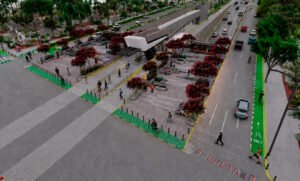
The proposal emerged alongside the planned expansion of another public transportation system. Moreover, as part of the future extension of Trolleybus Line 10, authorities are also considering the construction of a new bike lane to complement the project and promote more sustainable mobility.
The expansion of Trolleybus Line 10 will replace more than 600 minibuses currently operating along Ermita Iztapalapa Avenue. As a result, the roadway will require a complete redesign, since it currently lacks both dedicated bus lanes and cycling infrastructure.
This is where the opportunity for the construction of a new bike lane comes into play, as the roadway redesign would make it possible to plan and integrate a dedicated cycling lane as part of the project.
Where Would the Bike Lane Run?
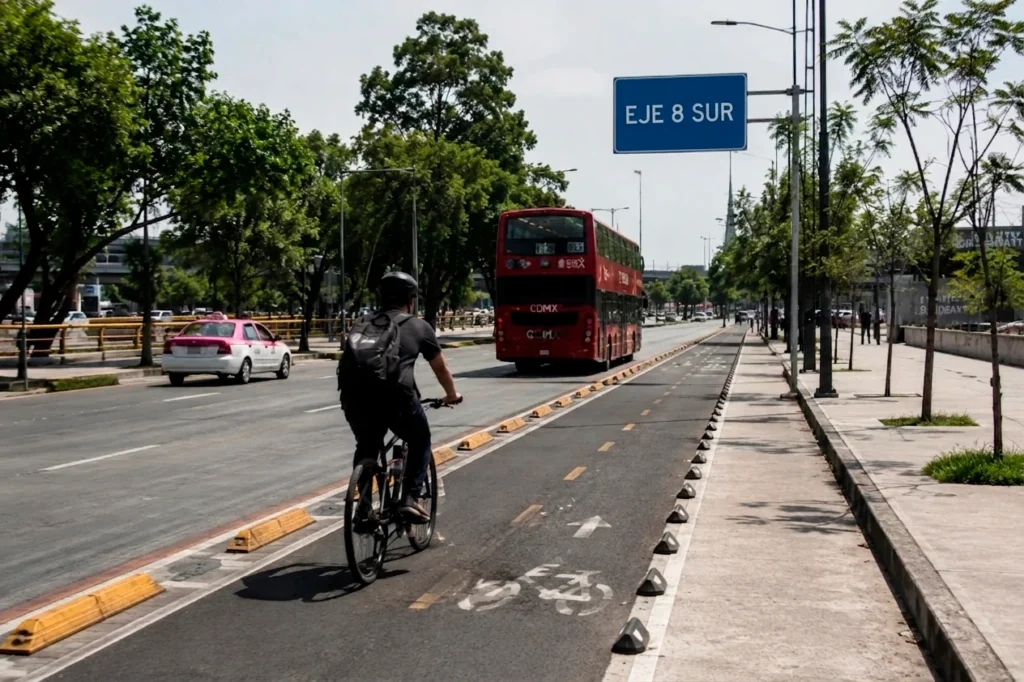
The extension of Trolleybus Line 10 will run along much of Ermita Iztapalapa Avenue. Thus, according to the proposal, it will follow Eje 8, connecting Constitución de 1917 Avenue with the Metro stations at Mixcoac, Ermita, and Tasqueña.
Based on information from SEMOVI, if the project moves forward, the Eje 8 Sur bike lane could share the same corridor as the trolleybus. Therefore, it would follow the same route, at least as far as Mixcoac.
In this way, the bike lane would fulfill a key connectivity role by allowing residents of the borough to reach other public transportation systems, such as the subway, by bicycle.
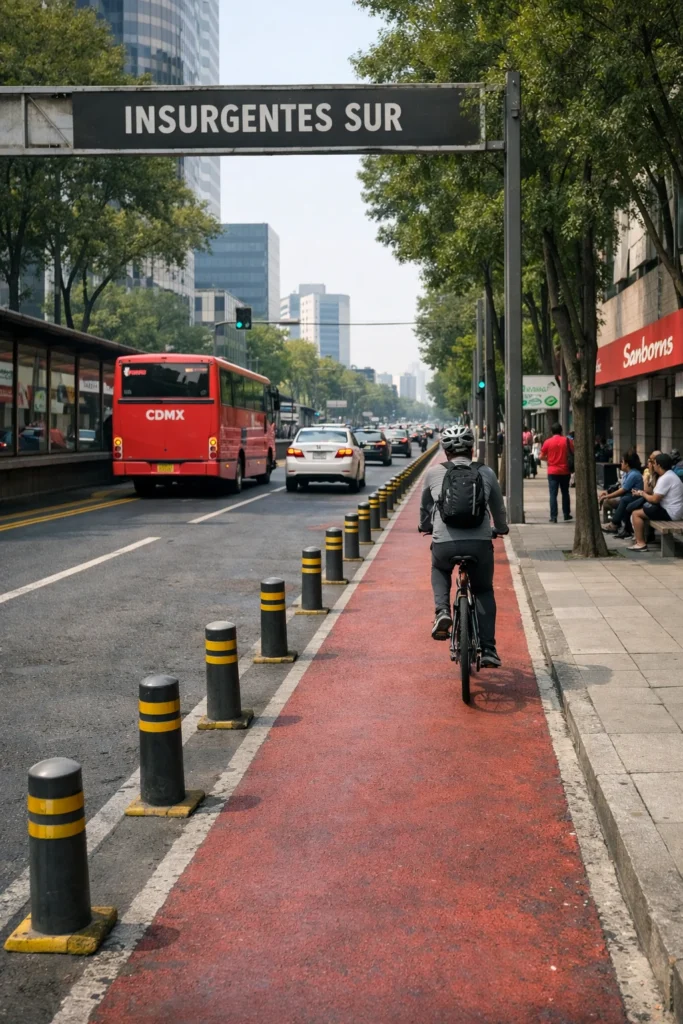
As Important as the Insurgentes Sur Bike Lane
According to Ernesto Morua, who holds a master’s degree in Social Studies, the implementation of this bike lane could become a project as significant as the Insurgentes Bike Lane. The projected length and the strong connectivity it would provide with other cycling corridors—including the bike lanes along Eje Central and Insurgentes Sur—could make it one of the city’s most important cycling infrastructure projects.
“Calzada Ermita is one of Mexico City’s key urban corridors. The redesign should improve both pedestrian and cycling infrastructure. Moreover, the initiative is comparable in scale to the Insurgentes Bike Lane because it would benefit a large number of people. By connecting cyclists in eastern Mexico City to the broader cycling network, the project would address the current disconnect between Iztapalapa’s cycling infrastructure and the rest of the city,” Morua said.
As a result, the Eje 8 bike lane would connect eastern Mexico City with more central areas, giving residents the option of traveling by bicycle instead of relying solely on the Metro and Metrobús systems.
It Is Still Too Early To Tell
Although the proposed Eje 8 Sur bike lane has the potential to benefit thousands of residents, it is still only a proposal and has not yet been approved.
Furthermore, SEMOVI is currently assessing the technical feasibility of the proposal. Once that process concludes, approval would fall under the General Directorate of Traffic Engineering of the Citizen Security Department (SSC) and the Secretariat of Works and Services (SOBSE), the agency responsible for carrying out construction work on Mexico City’s primary road network.
In short, this is one part of the process, but it doesn’t mean that the bikeway will be performed. Don’t forget that is necessary a series of studies and analysis. Finally, even though Morua thinks that with a correct regulation it could be created the separated lane of trolleybus, the bike lane and the two lanes for cars, there’s a second option that would consist in create a shared bus bike lane.
“If that is not the case, a shared bus-bike lane could be implemented; however, it should include the necessary safety elements and measures to ensure that drivers remain aware of cyclists. This raises concerns about the risks of a non-separated bikeway along the corridor from Constitución Avenue to Mixcoac Avenue. The best option would be to provide both types of separation,” the specialist stated.