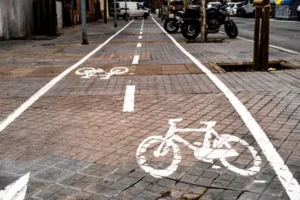


Cycling is one of the most liberating and healthy ways to navigate the city. However, simply riding a bike is not enough; effective communication on the road is essential to keep yourself and others safe. Bike hand signals serve as a universal language, enabling cyclists to clearly show drivers and pedestrians what they plan to do next. By learning and using them, you not only help prevent accidents, but also contribute to a more respectful road-sharing environment.
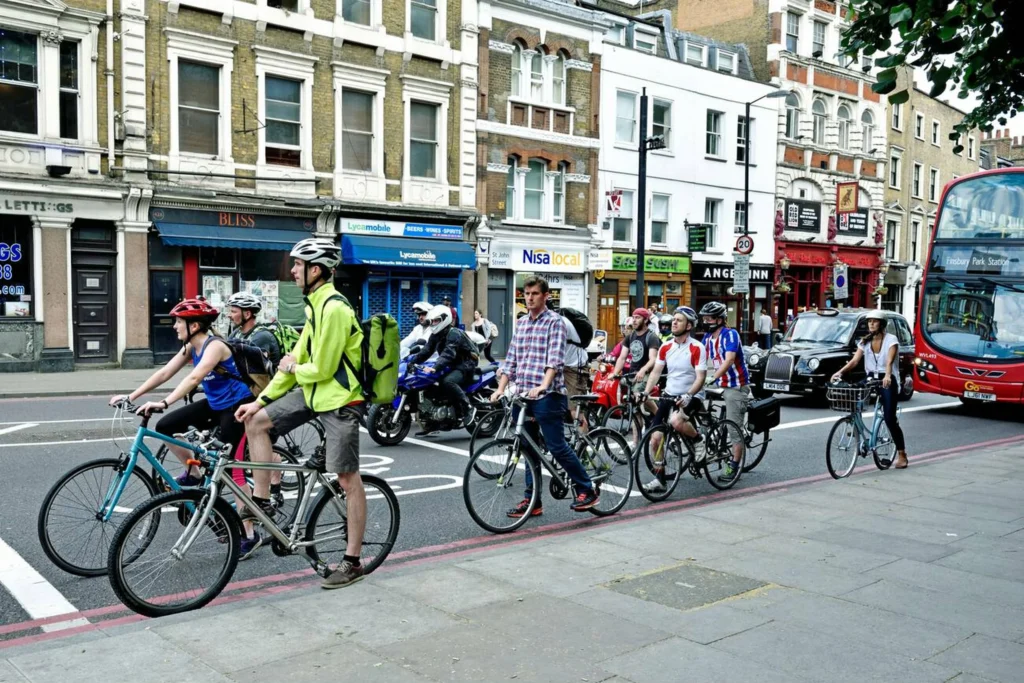
Why Use Bike Hand Signals?
Every movement on a bike can catch motorists by surprise if it is not communicated in advance. Raising your hand at the right moment alerts others to a turn, a slowdown, or a stop, giving everyone valuable time to react. In cities where millions of people and many types of vehicles share the road, cycling hand signals become a simple yet powerful way to help prevent accidents and improve road safety.
Essential Bike Hand Signals You Should Know
Cycling safely in urban environments requires more than just awareness of traffic rules. Clear communication with drivers and other cyclists is vital, and hand signals are the universal language of the road.
Left Turn
Extend your left arm straight out horizontally with your palm open. This signal clearly indicates that you are about to turn left.
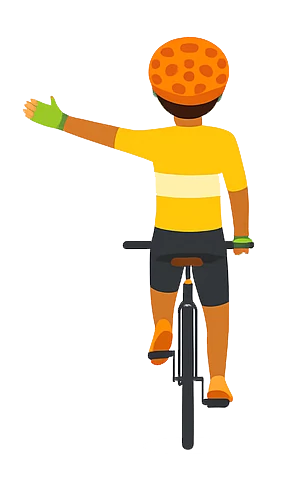
Right turn
To signal a right turn, you can either extend your right arm straight out or raise your left arm with your elbow bent at a 90-degree angle and your hand pointing upward.
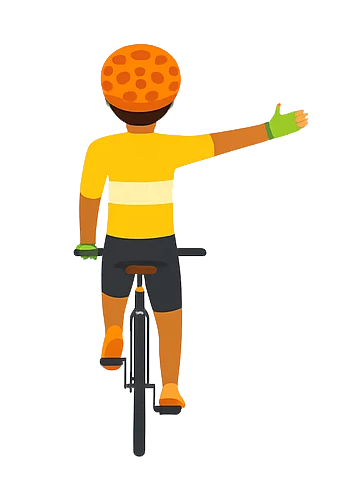
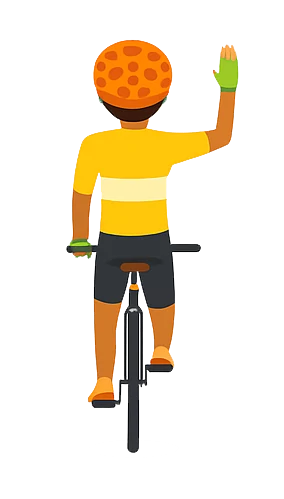
Stop
Raise your left arm with your elbow bent and your hand pointing upward. This signal lets people behind you know that you are coming to a complete stop.
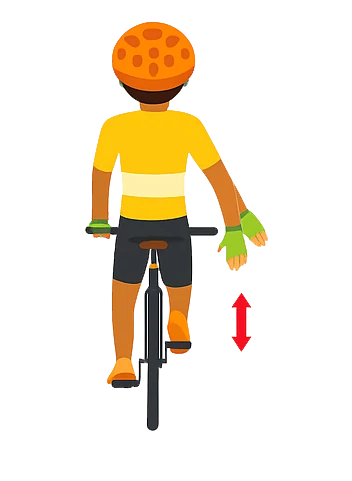
Slow down
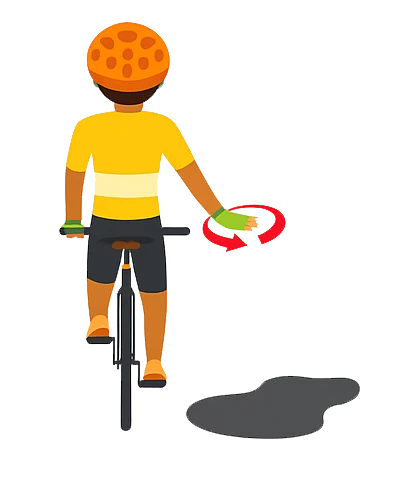
Extend your left arm downward and move your open hand up and down. This signal lets others know that you are reducing your speed.
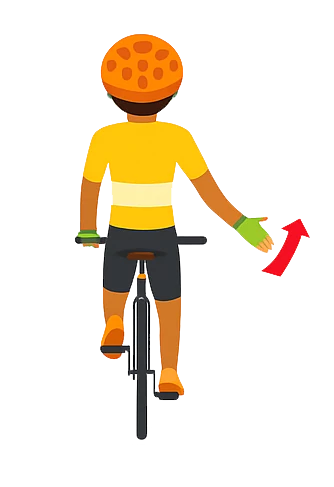
Yield
Extend your arm to the side and make a gesture inviting others to move forward. This signal indicates that you are yielding to another cyclist, a pedestrian, or a vehicle.
Warn of a pothole
Point downward with the arm closest to the obstacle. This signal alerts cyclists behind you to a pothole, storm drain, or other road hazard.
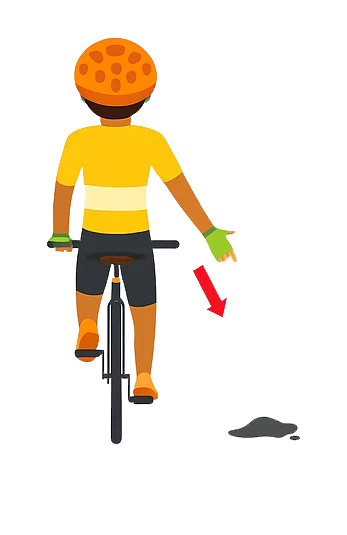
Warn of a road hazard
If there is a significant hazard ahead, such as water, gravel, or a large object, point downward toward the affected area with your arm. This signal helps others identify the hazard in time and react safely.
When Signaling Makes All the Difference
Using bike hand signals on every ride is much more than a simple gesture—it is a practical way to reduce risks and help everyone sharing the road understand your intentions. If you ride a bike, make these signals a consistent habit. If you drive, recognize them and respond accordingly. Clear communication can make the difference between a safe trip and a serious accident. Safer streets begin with everyday actions, and cycling hand signals remain one of the most effective.
Using clear bike hand signals well before turning or stopping helps everyone on the road understand your intentions. Cycling as a mode of transportation means following traffic laws and protecting your own safety as well as that of other road users. When used correctly and at the right time, hand signals help prevent crashes, improve communication, and encourage safer, more respectful road sharing.

Rules and Spaces for Safe Cycling
Using bike hand signals is essential, but it is only one part of riding safely. Respecting spaces designed for bicycles, such as bike lanes, cycle tracks, and shared-use paths, is equally important. These facilities not only improve traffic flow, but also help reduce risks by creating greater separation between cyclists and motor vehicles.
Diving into the rules of bike lanes helps make every ride safer and ensures more respectful coexistence with drivers and pedestrians. A practical summary can be found in this dedicated blog.
Anyone looking for a broader perspective on cycling infrastructure and culture will find the Urban Bikeway Design Guide valuable, as it shows how these routes are part of a strategy for creating safer and more sustainable cities.