

Before Amsterdam became a global benchmark for cycling mobility, the city faced a complex reality. During the 1960s and 1970s, the rapid growth of automobiles completely reshaped public space. As a consequence, streets became faster, neighborhoods were fragmented, and accidents increased at an alarming rate. In this context, families began to realize that daily life unfolded in an environment that no longer protected those who most relied on the city for safe travel: children.
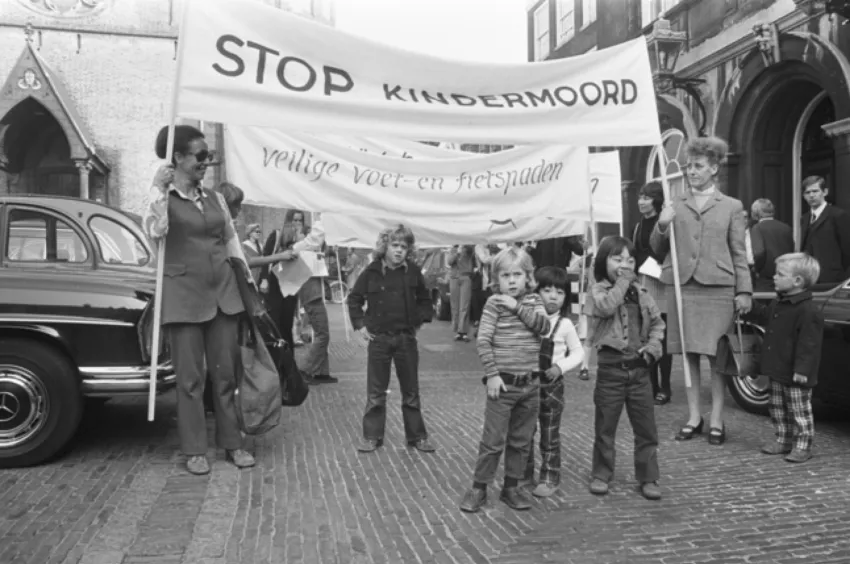
It was then that Stop de Kindermoord Movement took shape, a grassroots effort driven not by urban planning but by social urgency. Data on child deaths in traffic accidents exposed a deep crisis. Consequently, what had appeared unavoidable became a rallying cause for entire communities. Furthermore, the campaign gave voice to a rising concern and paved the way for a transformation that would redefine the city’s future.
Stop de Kindermoord and the Beginning of Urban Change
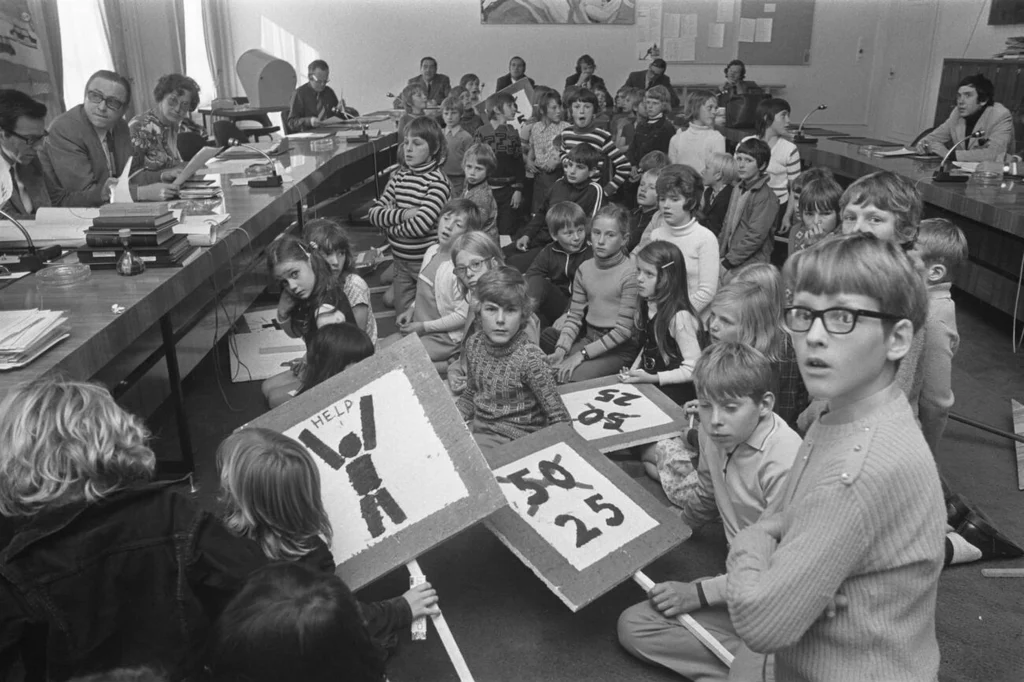
The movement took shape in neighborhoods where community life had been overtaken by speed. Families came together to show that streets could no longer serve solely as corridors for cars. Through visible demonstrations, symbolic closures, and direct appeals to authorities, citizens began to expose an undeniable truth: the urban model had ceased to meet the real needs of those who inhabit the city.
The relevance of this campaign lies in the fact that it did not raise a technical discussion but a human one. The initiative revealed that urban design was creating unacceptable risks and that daily life could no longer rely on decisions prioritizing fast traffic. As a result, public pressure continued to build around a simple yet compelling demand: safer public spaces.
A City at Breaking Point
Historical accounts portray an Amsterdam very different from the city we know today. Streets were congested with traffic, pedestrian routes provided little safety, and a constant sense of danger permeated everyday life. The bicycle—once a common mode of transportation—gradually gave way to the automobile, leaving those who continued to ride increasingly vulnerable.
In this context, the city faced mounting tension. Accidents were not isolated events but symptoms of an unbalanced urban environment. This advocacy effort emerged precisely when that reality became unsustainable. Citizens no longer accepted that safety should depend on decisions made without considering the everyday experiences of those who walked or cycled.
The Origin of the Stop de Kindermoord Movement
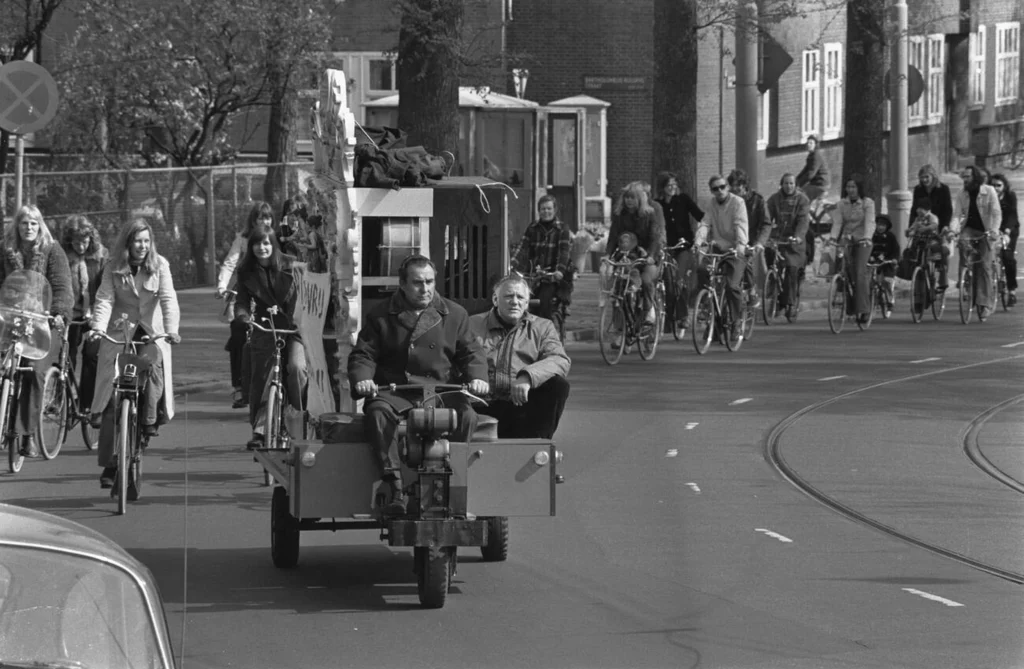
The civic initiative took shape through community actions aimed at reversing a dangerous trend. Parents, neighbors, and local groups organized to place the issue at the center of public debate. Moreover, the demonstrations not only denounced the crisis but also revealed how neighborhood life had changed since the massive arrival of automobiles. As a consequence, the citizens’ campaign emphasized that a city cannot develop while ignoring the basic safety of its population.
The significant achievement of the cause was its ability to articulate a collective demand that went beyond the neighborhoods where it began. By naming the problem, the movement enabled society to understand that the risk was not isolated but systemic. As a consequence, this recognition allowed the debate to move toward real changes aimed at protecting those without the power of an engine to travel safely. Moreover, the campaign demonstrated how civic action could transform urban priorities and place public safety at the center of mobility discussions.
A Citizens’ Campaign That Reshaped How Streets Were Shared
As Stop de Kindermoord gathering strength, authorities were forced to confront the scale of the problem. Social pressure did not call for symbolic fixes; it demanded a full reconsideration of the urban model. This opened a debate that questioned the allocation of space, the dominance of automobiles, and the urgent need to create environments where walking or cycling would not mean constant risk. Ultimately, this turning point showed how civic action could reshape urban priorities and place safety at the heart of mobility planning.
The response was measured yet decisive. City leaders recognized the need to rethink urban infrastructure and restore the livability of public spaces. Soon after, initiatives were introduced to calm traffic, reorganize street networks, and create safer routes for cyclists and pedestrians. In doing so, the campaign achieved perhaps its greatest accomplishment: transforming the way mobility was perceived and prioritized.
Stop de Kindermoord: A Watershed Moment for Amsterdam
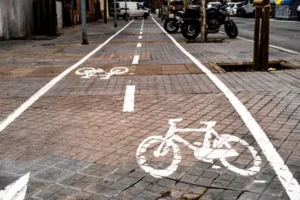
The transformation that followed reshaped Amsterdam’s identity. By redesigning streets to better accommodate cyclists and pedestrians, the city created calmer roads, safer intersections, and more connected routes. The result was a new urban model built around safety, accessibility, and the shared use of public space.
These changes extended far beyond infrastructure, reshaping the broader understanding of how mobility influences quality of life. The collective effort proved that cities can redefine their future when public concerns are taken seriously and the protection of human life becomes a guiding principle. Consequently, the movement emerged as a landmark example of civic engagement driving urban transformation. More importantly, it underscored that safe, healthy communities are at the heart of sustainable mobility.
The Living Legacy of the Movement
The movement endures as a benchmark, having achieved something exceptional: transforming the way society envisions its streets. Its influence continues to shape contemporary debates on safe mobility, urban design, and collective responsibility. As a result, the spirit of the campaign —protecting those who inhabit the city— still guides reflections on quality of life in urban environments. Moreover, this enduring benchmark demonstrates that civic action can inspire sustainable policies and redefine the identity of public space.
Anyone wishing to understand how current communities work to secure school routes can find analyses of bicycle escort initiatives that follow comparable principles. Equally enriching are discussions on how the growing number of cyclists affects traffic safety — issues that directly echo the vision behind the movement. Together, these practices confirm that shared responsibility and civic engagement are still vital to building safer urban mobility.