

As efforts to improve bike lane safety continue, stricter enforcement measures are gaining support. Among the proposed actions is towing vehicles parked in bike lanes, a step intended to prevent obstructions and improve safety for cyclists.
Monterrey Mayor Luis Donaldo Colosio announced that authorities are prepared to strengthen enforcement if motorists continue parking in bike lanes. The proposed measures aim to keep cycling infrastructure clear and improve safety for cyclists.
His comments specifically addressed the Washington Street bike lane, located in the Monterrey city.
According to cyclists and local media reports, vehicles parked in the Washington Street bike lane have become a recurring problem, with many drivers using the cycling corridor as an unofficial parking area, reducing safety for cyclists.
In response to these repeated violations, Monterrey officials warned that motorists who park in bike lanes should expect stricter enforcement. The city’s Traffic and Road Safety Department will tow illegally parked vehicles and take them to the impound lot.
People Are More Likely to Follow the Rules When Strict Penalties Are Enforced
Colosio also emphasized that ongoing enforcement efforts and $120 fines may not be enough to prevent drivers from blocking the bike lane. If the problem persists, the city will implement stricter enforcement measures.
“Currently, we are enforcing fines and warnings. However, if the situation continues, regulations allow us to tow vehicles and apply stronger penalties. We hope this will not be necessary, because our goal is to create a city where people respect cycling infrastructure without the need for severe sanctions,” Colosio explained.
The mayor explained that the goal is not to punish motorists but to create safer, more respectful streets for everyone. He added that protecting cycling infrastructure should involve more than fines and instead focus on fostering a stronger culture of road safety and mutual respect among all road users.
He added that people need to recognize that everyone has the right to move safely through the city while respecting other road users. This applies to pedestrians, cyclists, motorists, and other road users alike.
“It’s also a topic of culture and respect, we have to understand that public space, above all public roads, are for all the people and that’s why we have exclusive lanes for every transport and pedestrian”, mentioned.
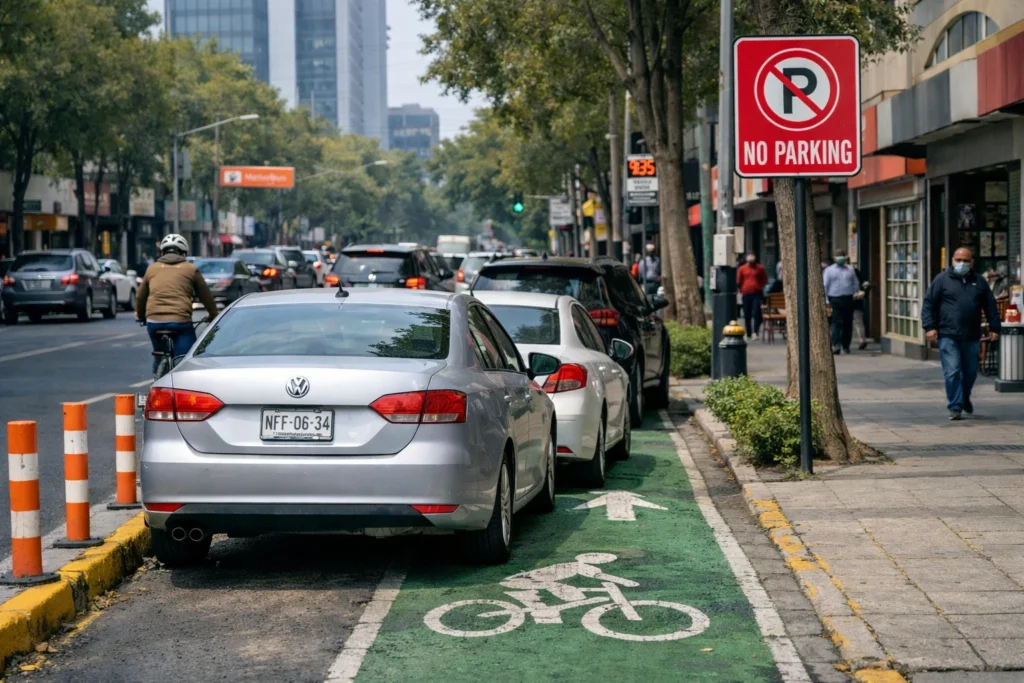
Vehicles on Bike Lanes: A Persistent Risk
Although the Washington Street bike lane has yet to be officially inaugurated, vehicles are already obstructing the cycling corridor. In addition, the infrastructure has already suffered visible damage, raising concerns about long-term safety and maintenance.
As part of Monterrey’s Green Corridors project, barriers were installed last May to separate the bike lane from motor vehicle traffic. However, the infrastructure has already suffered cracks and impact damage caused by vehicles parking against the protective barriers.
Protecting cycling infrastructure requires the right traffic control devices including lane separators, Kayak Channelizers, delineator posts and channelizing vertical panels that help define and reinforce the limits of a bike lane.
Any vehicle that encroaches on a designated bike lane may be subject to enforcement actions, including fines and towing to the municipal impound lot following an official report.