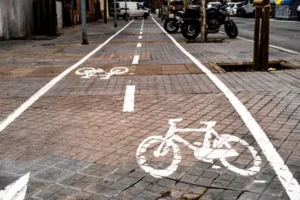


Bicycle road signs are found on streets and roads everywhere, yet few people stop to consider their true meaning. Road safety goes beyond cyclists’ behavior; it is a shared responsibility among all road users, including pedestrians and drivers, who must understand and respect traffic signs. Ignoring these signs increases the risk of accidents and can make everyday journeys more dangerous.
In this blog, we invite you to learn the meaning of common bicycle road signs you’ve probably seen before but may not fully understand. Understanding these bicycle road signs is essential for staying safe and creating a more respectful environment for cyclists, pedestrians, and drivers.

Bicycle Priority Area Sign
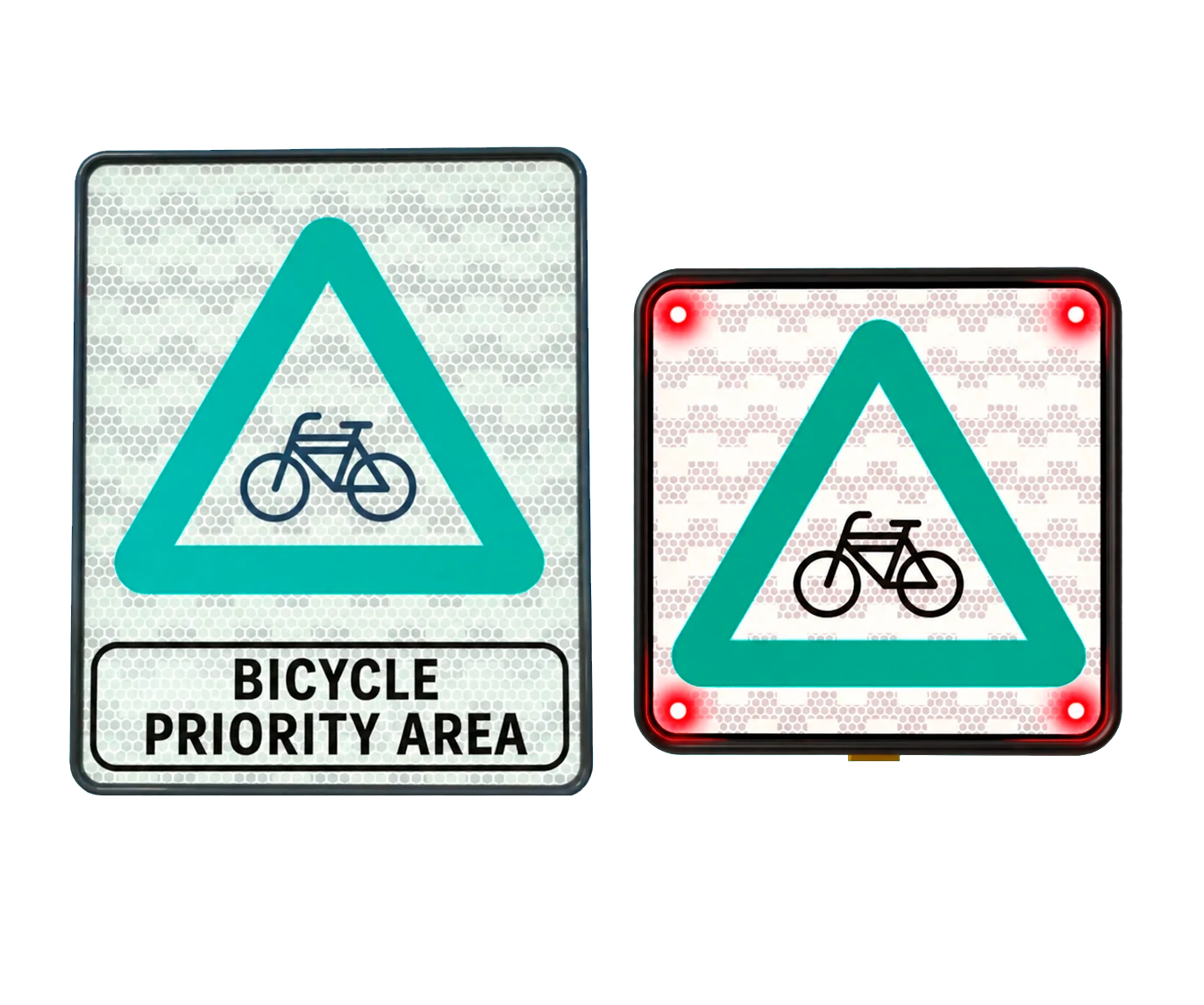
A green triangle featuring a bicycle icon in the middle shows that cyclists have priority at that location. Moreover, this sign is placed at crossings where confusion about traffic order may occur.
The green color conveys a sense of safety and trust, and the triangular design helps the sign stand out immediately. Therefore, the message is clear: drivers must reduce their speed and give cyclists priority when necessary.
The purpose of this sign is to create a safer experience for cyclists and minimize conflicts in traffic flow.
Bike Lane Signage
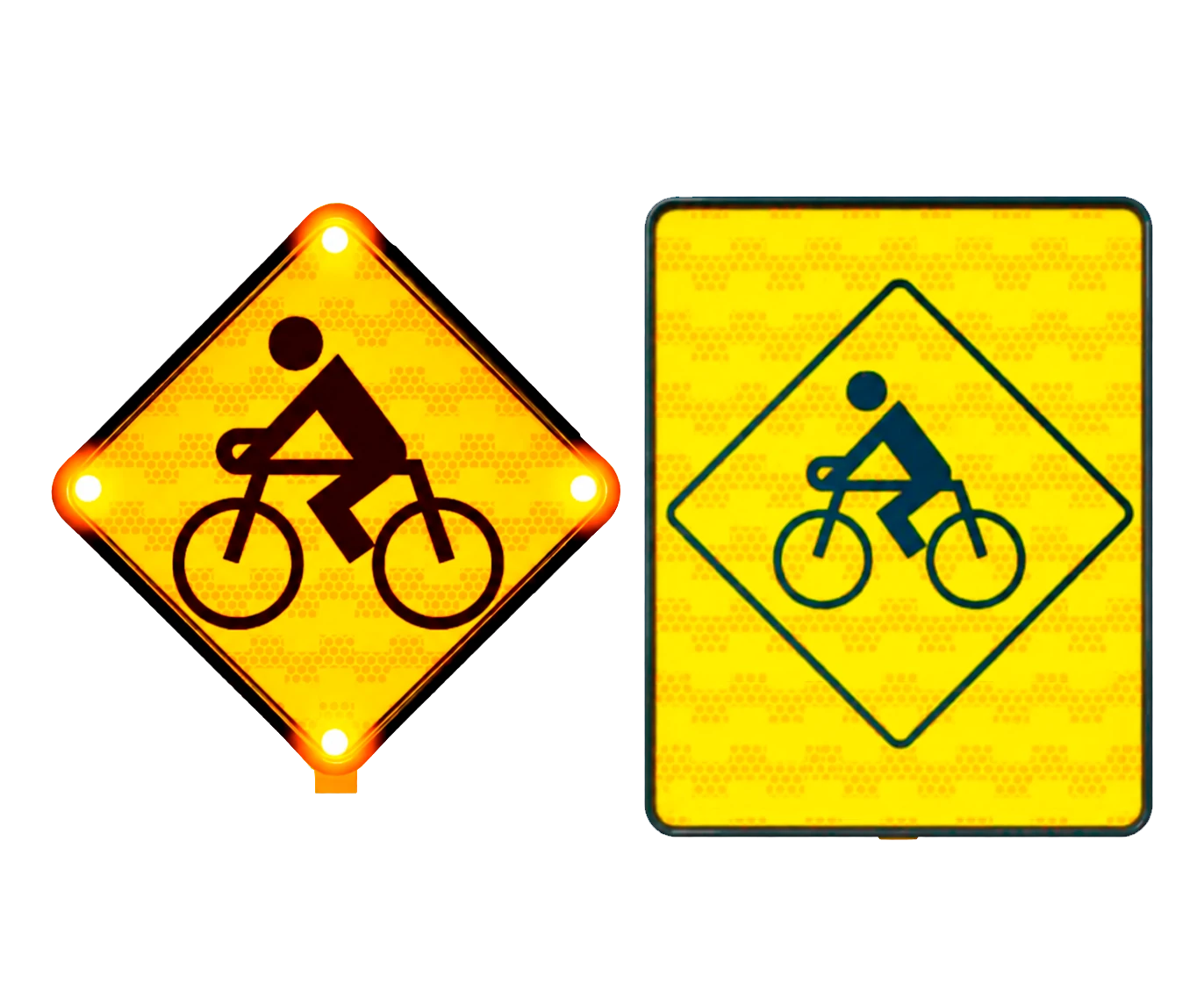
Many streets display yellow signs featuring a bicycle rider symbol. In other words, these signs show that the area includes cycling infrastructure and designated lanes for cyclists.
The yellow color acts as a warning signal, helping pedestrians and drivers recognize that this space belongs to cyclists and should not be obstructed.
As a result, this approach helps create safer routes for cyclists and improves urban mobility for cyclists.
Cyclist Crossing Sign
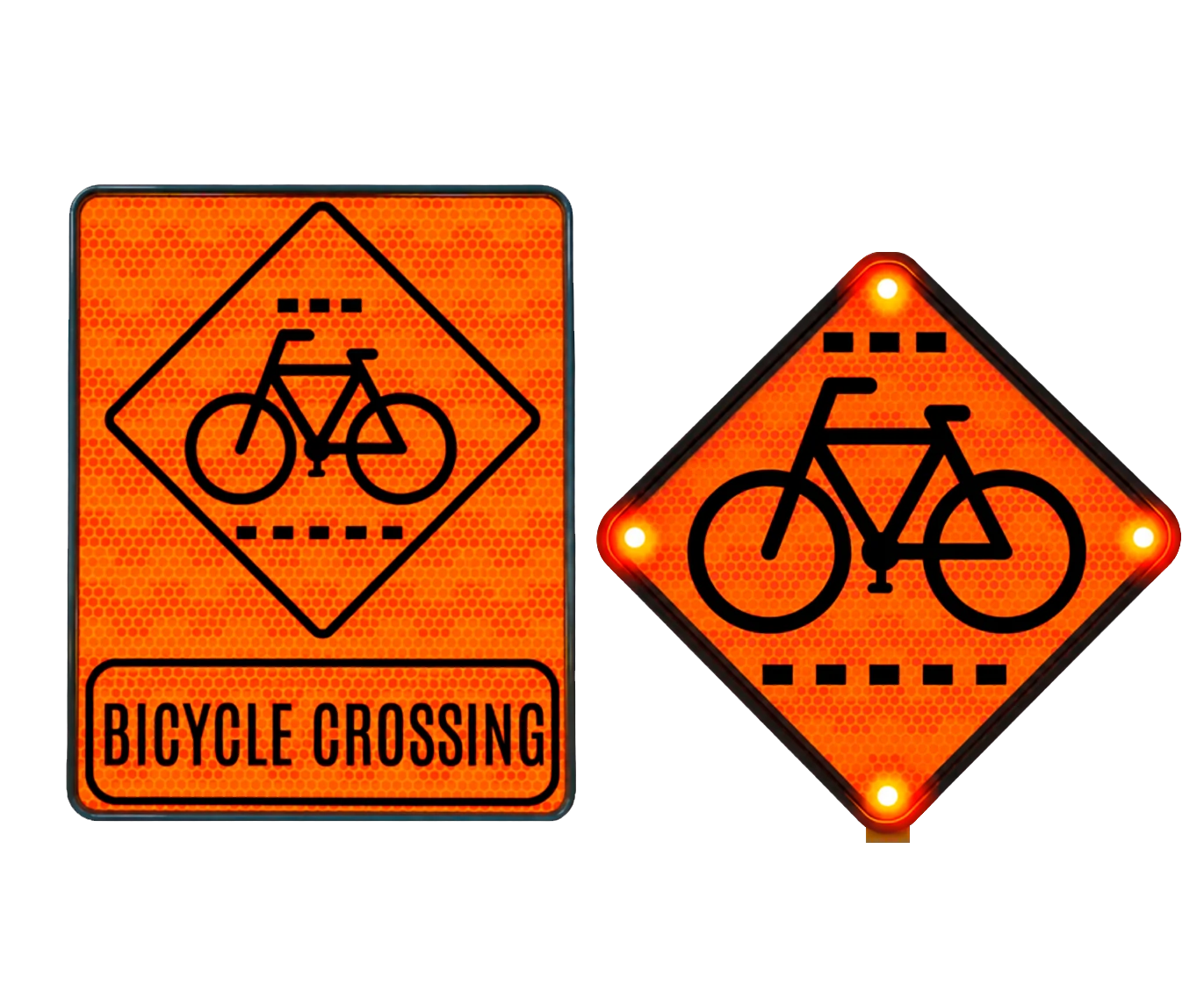
Orange bicycle crossing signs are commonly placed in areas where cyclists cross the road. In addition, these signs often appear near construction projects or sections with temporary changes in the roadway.
The orange color stands out because of the connection with temporary road alerts. Therefore, the message is clear: reduce speed and remain aware of cyclists crossing the street.
In this way, both cyclists and drivers receive greater protection in high-risk areas.
Cyclist Warning Sign
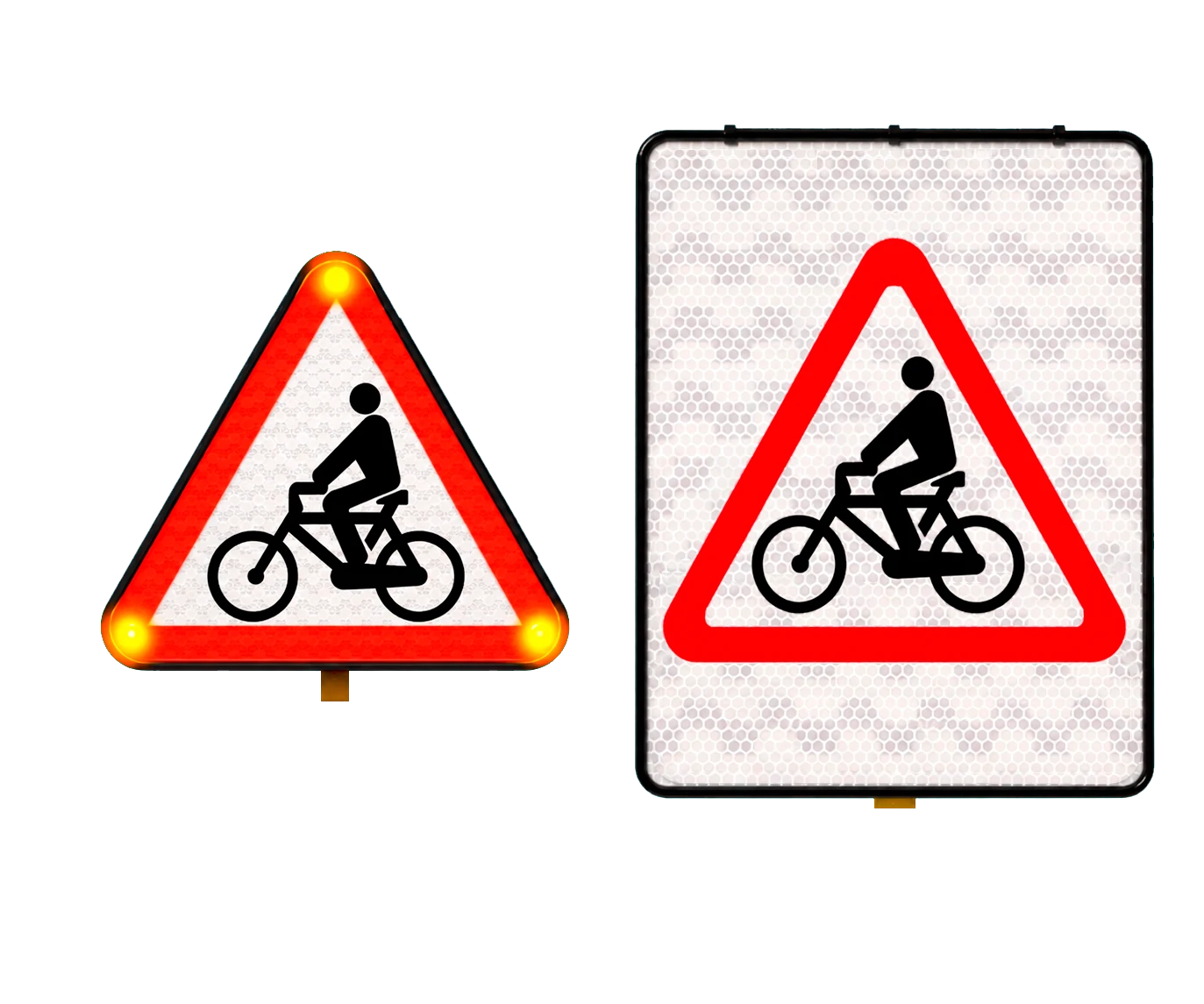
A red-bordered triangle featuring a bicycle symbol in the middle warns that cyclists may commonly be found in the area. Moreover, certain versions display the word “CYCLISTS” to provide a more direct and easy-to-understand message.
The red color represents a clear call for caution, and the triangular design reinforces the alert message. This helps drivers recognize the need to reduce speed in areas with frequent bicycle traffic.
The purpose is to remind all road users that mobility requires shared responsibility, and cyclists deserve respect for safer journeys.
Start and End of Bike Lane Signals
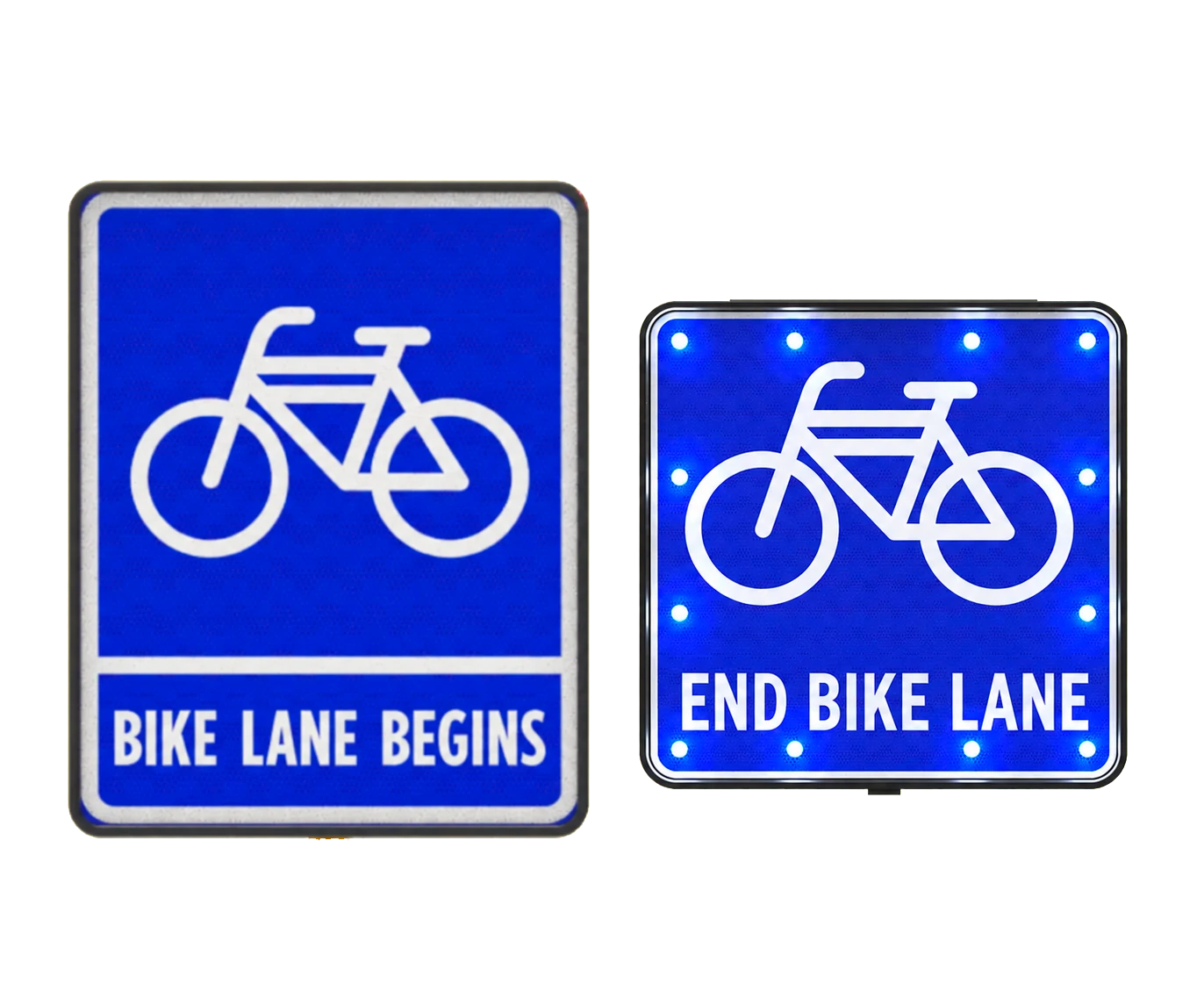
When you see a blue sign with a white bicycle symbol that reads “BIKE LANE BEGINS” or “END BIKE LANE,” it marks the beginning or end of a lane reserved exclusively for bicycle traffic.
The blue color highlights important information and clearly marks the area reserved for cycling. In addition, clear visual guidance helps riders stay on the designated route.
Clear road markings help cyclists identify a safe riding area. In addition, motorists can easily recognize the designated space and avoid driving into the bike lane.
The Importance of Understanding and Respecting Bicycle Road Signs
Bicycle road signs play a key role in safe and organized mobility rather than serving as ordinary street signs. Moreover, paying attention to these signs helps reduce confusion on the road. Ignoring them may seem harmless, yet such decisions can increase accident risks for cyclists, pedestrians, and drivers.
In this blog you’ll discover why these bicycle road signs are often overlooked and how the Urban Bikeway Design Guide highlights the role of bicycle infrastructure in transforming urban mobility around the world. Understanding the meaning of these signs is a simple yet effective way to improve safety and help prevent accidents. The next time you see one of these signs on the road, you will recognize the value behind each message and design.