
The Bratislava Cycling Corridor (Cyklotrasa) along Vajanského nábrežie has long been one of the Slovak capital’s most important bike lanes. However, the bike lane’s first design with concrete lane separators sparked debate among cyclists, motorists, and transport experts. In fact, both the Regional Transport Inspection and the Ministry of Transport emphasized that the lanes were too narrow, unsafe, and challenging to maintain throughout the winter season.
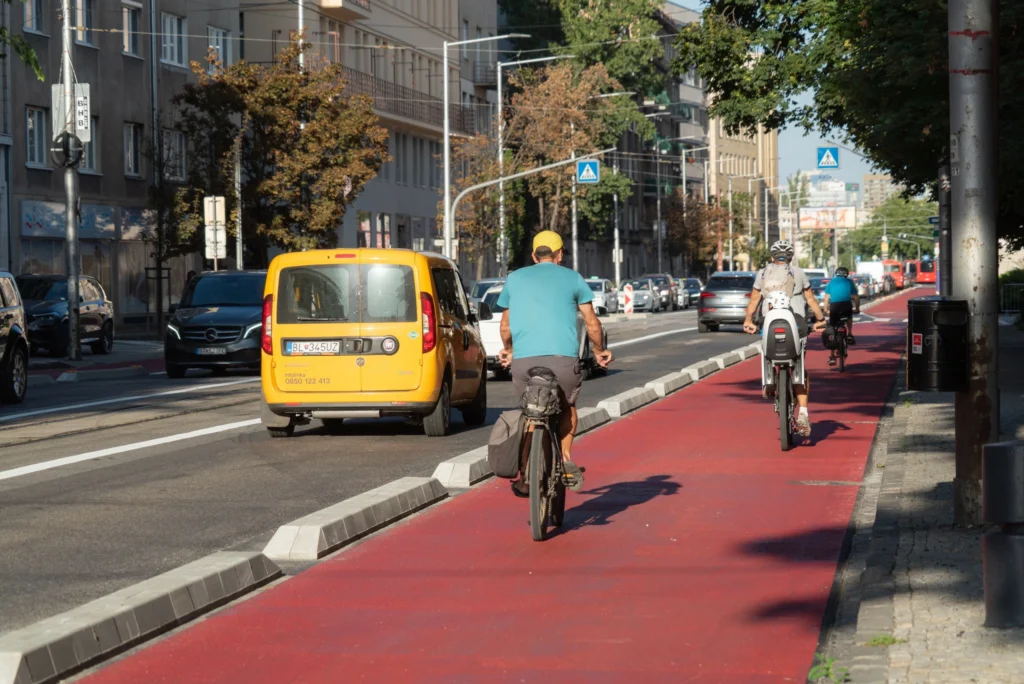
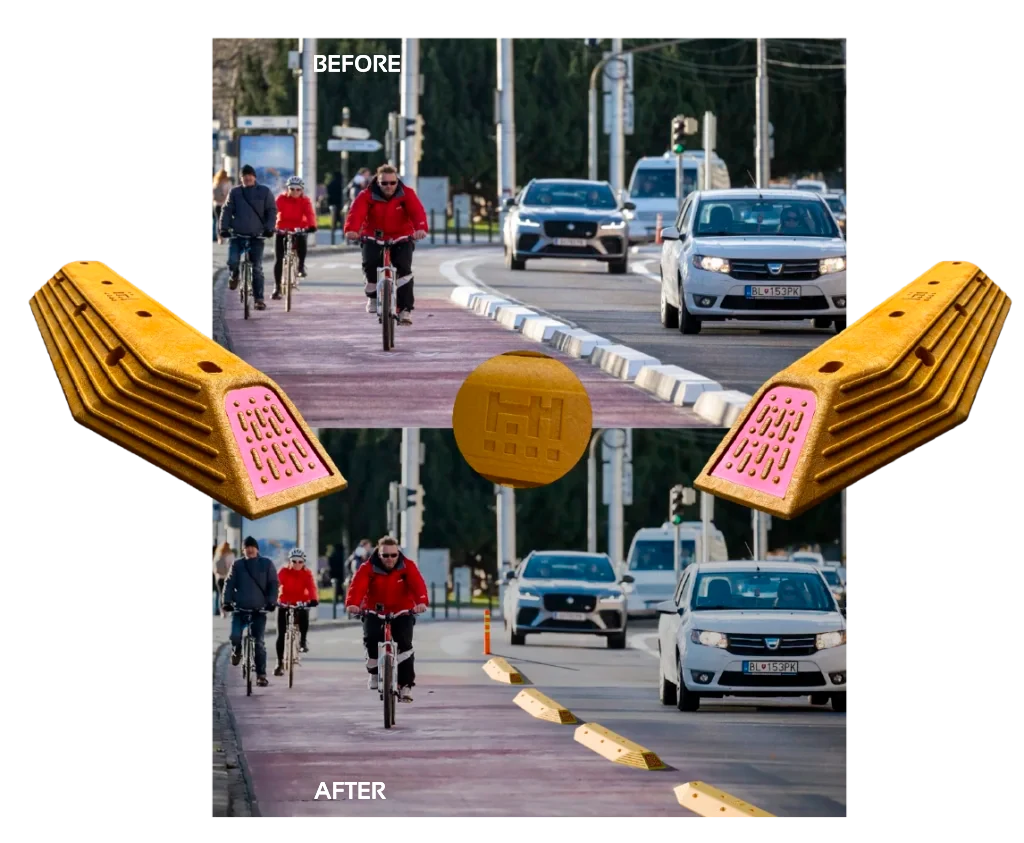
To address these concerns, the city administration reviewed the project in early 2025 and announced the removal of hazardous lane separators. The intervention began on September 13, 2025, and concluded on September 19, keeping the riverfront open to cars and bicycles with only partial lane restrictions. Soon after, the renovated corridor transformed daily routines, becoming a reliable and safer space for cycling.
Only a few days have passed since the renovation, and the Bratislava Cycling Corridor has already changed the way people moved through the city, becoming a reliable space for cycling.
From Concrete to Polymer: A Key Change
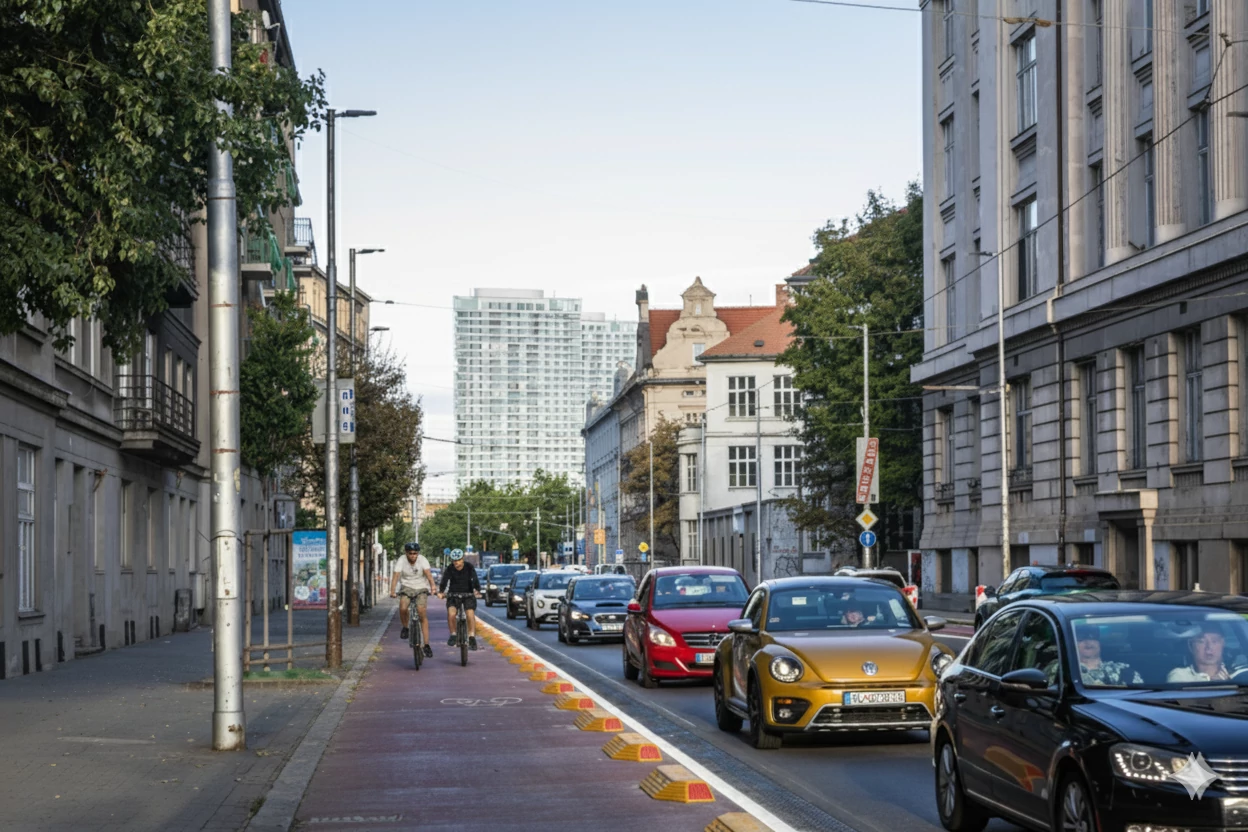
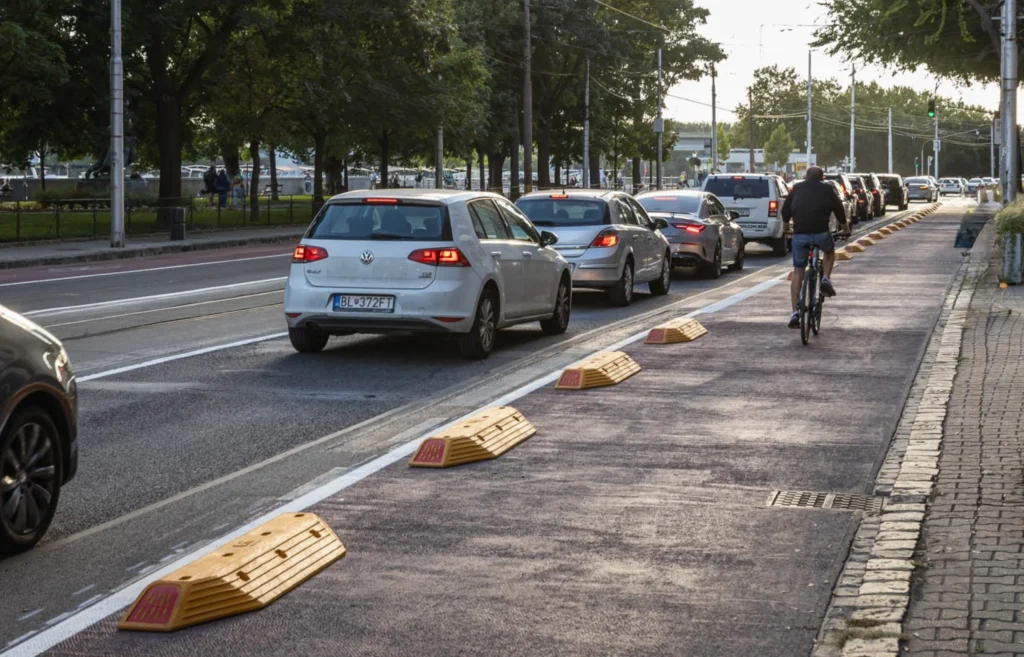
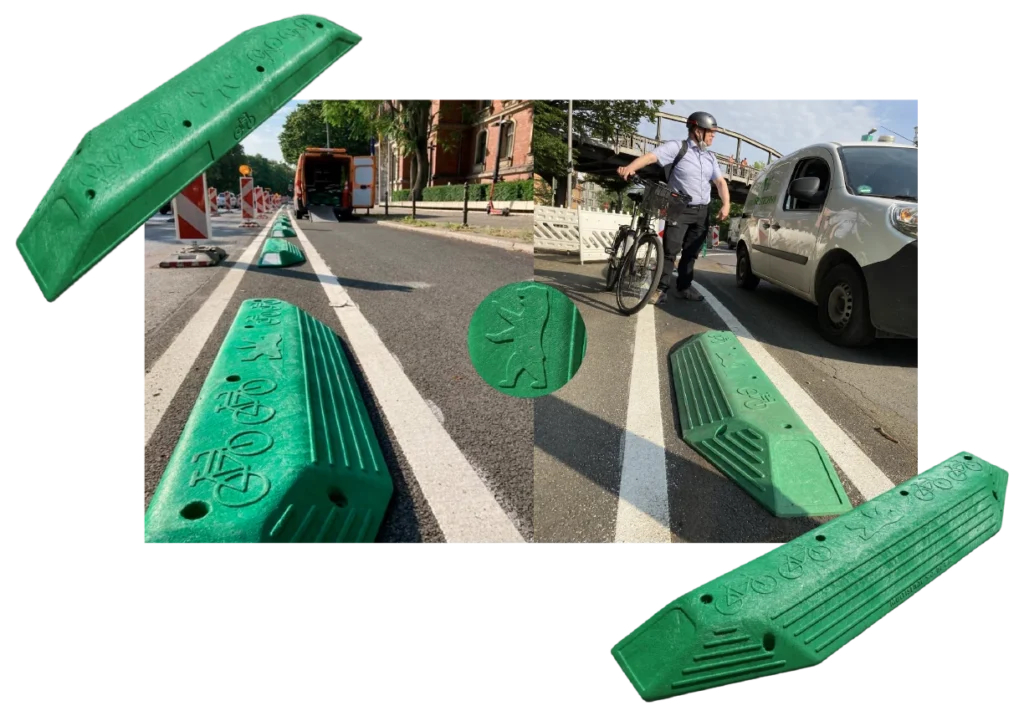
The project replaced rigid concrete separators with polymer units featuring beveled edges and reflective elements. As a result, safety improved on impact, and maintenance became easier. Moreover, instead of placing the new delineators outside the bike lane, they were installed a few centimeters inside—thus creating extra room for motorists while maintaining cyclist protection.
The chosen material was the high-strength polymer H7 Bike Lane Delineator manufactured in Mexico. This modular design allows individual sections to be replaced without interrupting service, reducing both costs and repair times.
Expressing City Identity Through Every Element
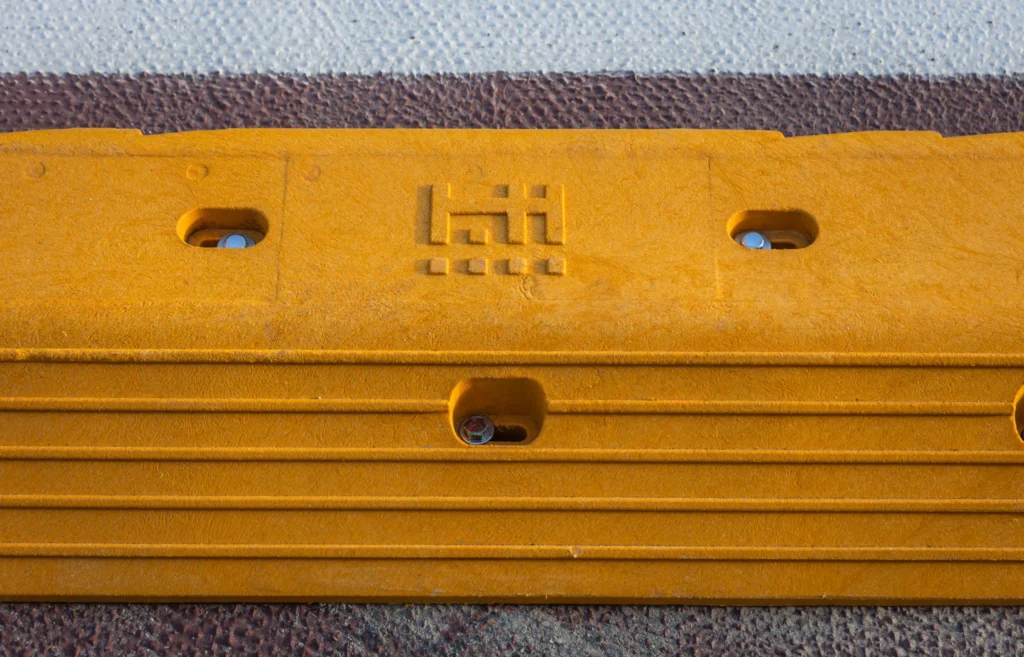
One of the most visible aspects of the renewal is the incorporation of Bratislava’s official logo on each H7 Bike Lane Delineator. Consequently, the bike lane is not only a technical solution but also a symbol of civic identity. For cyclists, this feature reinforces confidence and belonging, showing that the corridor is part of a long‑term, officially endorsed mobility strategy.
For cyclists, this feature serves as a visible sign that the project is part of a planned and officially endorsed strategy rather than a temporary solution. Moreover, it reinforces confidence in the corridor’s permanence, underscoring Bratislava’s commitment to safe and sustainable urban mobility.
Additional Improvements to the Bratislava Cycling Corridor
The upgrade also included repainted pavement markings, with wider lines applied where no physical separators exist. The first segment modernized was the stretch between Komenský University and SNP Bridge (UFO Bridge). Subsequently, work continued on the opposite side of the waterfront, fully reconfigured as part of the same project.
Furthermore, the redesign met requirements from the Ministry of Transport and the Transport Inspection, addressing long‑standing safety concerns. With polymer lane separators and clearer traffic signage, Vajanského nábrežie evolved into a balanced space for cyclists and drivers alike.
Immediate Impact
The transformation showed positive results from the first days of reopening:
- Cyclists report greater safety and confidence while riding.
- Additionally, incidents caused by rigid separators have decreased.
- Moreover, coexistence with motorized traffic has improved thanks to the increased roadway space.
- Furthermore, maintenance is now faster and more cost-effective due to the modular design of the lane separators.
Bratislava Validated a Cycling Infrastructure Model Adopted Worldwide
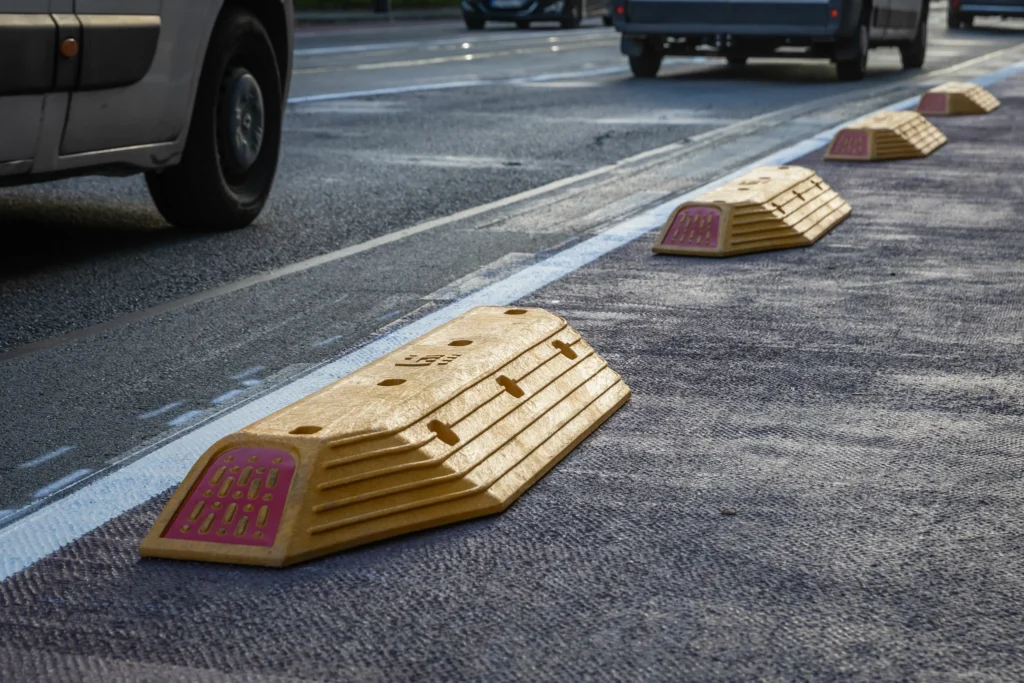
Bratislava’s experience demonstrates how incorporating feedback from residents and transportation experts can turn a controversial project into a practical and effective solution. Once questioned, the bike lane has now become a reference point for safe mobility and efficient urban design.
These types of interventions have expanded to other European capitals, including Berlin, Germany, where similar solutions are now being used to protect cyclists (see case study here). Moreover, Mexico has played a pioneering role in developing these types of lane separators and exporting its technology to cities around the world (more examples here).
With this renewal, Bratislava provides residents and visitors with a safer, more organized, and better‑equipped space to meet the growing demand for active mobility in the years ahead.