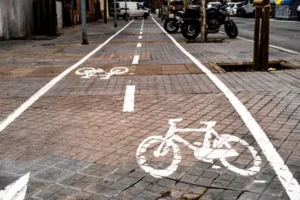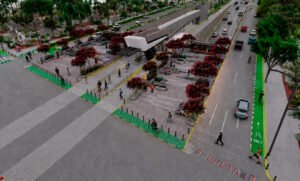



Mexico City has set a goal of building 248 miles of cycling infrastructure before the end of the current administration. Despite this progress, cyclists continue to demand the completion of the División del Norte Bike Lane, describing the corridor as one of the capital’s most important unfinished cycling projects.
According to residents of Coyoacán and Benito Juárez boroughs, as well as cycling advocates, the División del Norte Bike Lane serves hundreds of cyclists every day, highlighting its value within Mexico City’s cycling network.
Despite this, several segments still lack proper traffic signage and protected lane separation, leaving riders with a lower level of safety.
División del Norte Bike Lane: A Viable Project Still Awaiting Recognition
According to Bernardo Baranda, Regional Director of ITDP (Institute for Transportation and Development Policy) Mexico, the División del Norte Bike Lane serves as a strategic cycling corridor linking southwestern, northern, and central Mexico City. Consequently, he also noted that proper maintenance, along with improved traffic control devices and road signage, is essential to increase safety for cyclists.
The International NGO Executive explained, “Because División del Norte runs diagonally, it creates a direct connection between neighborhoods such as Narvarte, Del Valle, and downtown Coyoacán. Many cyclists already travel along this corridor every day. However, the main obstacle so far has been reaching an agreement with local residents.”
Baranda pointed out that, although the División del Norte Bike Lane already includes cycling infrastructure, the current corridor still lacks the proper protected lane design needed to improve cyclist safety. During an interview with Reforma, he also stated, “Although the División del Norte Bike Lane already has cycling infrastructure, it does not meet the quality and safety standards needed for a protected cycling corridor.
The lack of formal approval continues to expose cyclists to dangerous intersections and vehicle encroachment.” He also explained that the technical studies have already confirmed the project’s viability, leaving official implementation as the final pending step.
Protected Bike Lane Still Needed
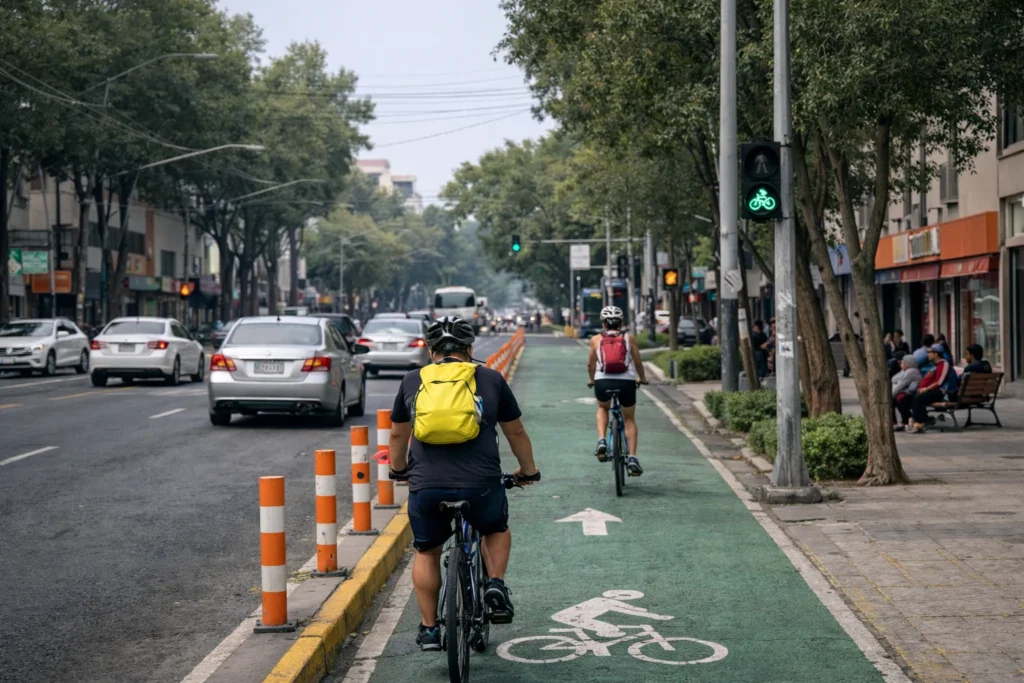
Baranda explained that the División del Norte Bike Lane has lane markings and delineators but lacks the physical protection expected from a modern cycling corridor. Furthermore, he highlighted the importance of continuing dialogue with residents and local businesses. Although some merchants claim the bike lane disrupts traffic and reduces customer activity, Baranda maintained that available evidence shows the opposite effect.
Cycling advocate Ximena Rosas, a resident of Coyoacán, also told Reforma that the División del Norte Bike Lane requires better corridor integration and additional traffic control devices to provide greater protection for cyclists. She also noted that city authorities have held discussions with local business owners but not with many of the people who benefit from the bike lane.
“Exist dangerous crossings as Eje 4, Eje 6 at Churubusco and Viaducto. But there isn’t political will to reach an agreement, even when the project was presented by the capital government, the last we heard is that were reunited with traders but civil society was left out of the dialogue”, she said.
At present, the only protected segment of the División del Norte bike lane runs from Churubusco to Municipio Libre, where bollards provide a physical barrier between cyclists and motor vehicles.