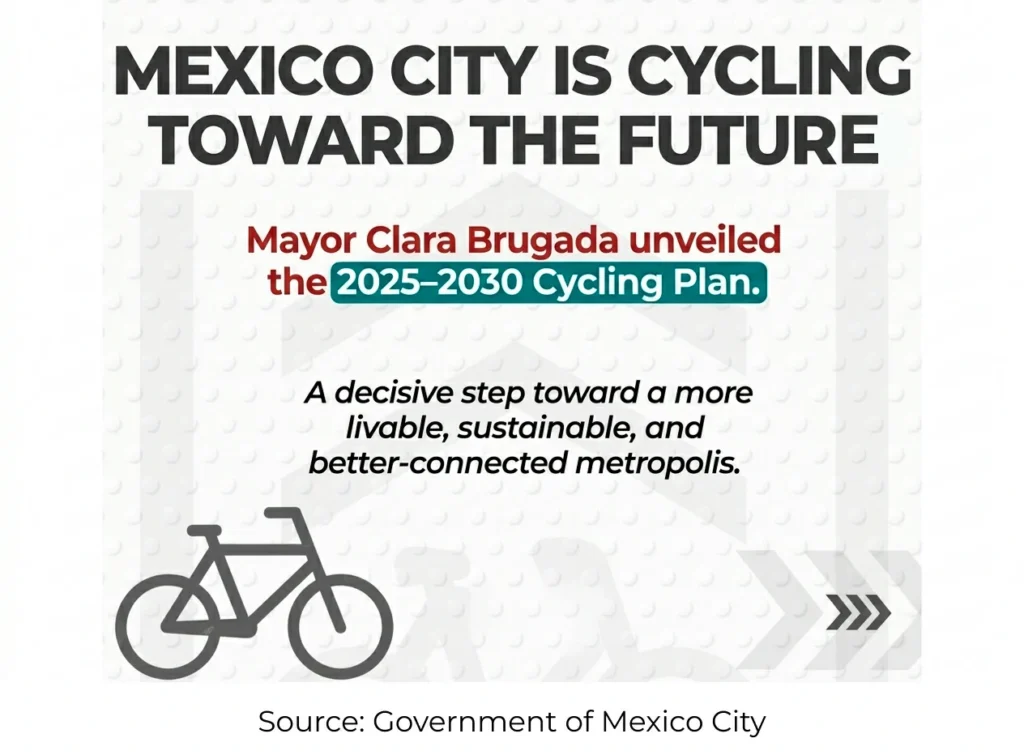

As preparations for the 2026 FIFA World Cup continue, Mexico City is committing to sustainable mobility. Expanding bike lanes and the Ecobici Bike-Sharing System is part of a strategy to make the city one of the most bicycle-friendly cities in the Americas. These initiatives aim to improve connectivity and encourage active transportation. With new cycling routes, more stations, and an expanded fleet, the capital seeks to reduce dependence on private vehicles and offer cleaner, more accessible alternatives. Millions of people will benefit from a more efficient, sustainable, cyclist-friendly mobility network.
Why Investing in Bike Lanes Is Essential for Sustainable Urban Development
This push for active mobility also responds to an environmental challenge. In a city where private vehicles generate thousands of tons of CO₂ daily, expanding bike lanes goes beyond infrastructure. It is a tool to reduce congestion, cut emissions, and promote cleaner transport. Cycling infrastructure is becoming key to sustainable urban development. By encouraging bicycles over cars for daily trips, cities can improve air quality and build more efficient transport networks.
The new cycling routes promote healthier lifestyles, reduce travel times, and support a balanced urban environment. Cycling becomes a practical everyday transport option. These improvements create a safer, more connected mobility network for residents and visitors. Mexico City reinforces its commitment to a modern, people-centered, sustainable model. Investing in cycling infrastructure supports a cleaner, more efficient city and improves quality of life.
Expanding Bike Lanes to Create a More Connected City
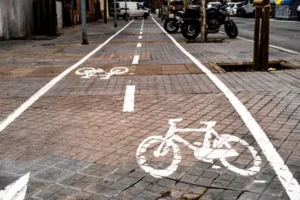
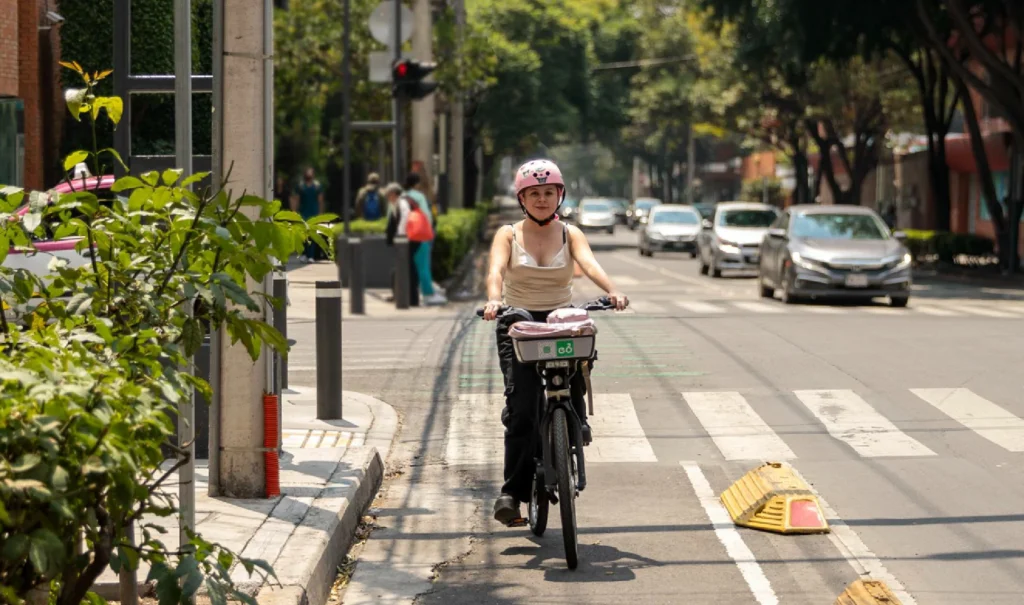
The expansion of bike lanes will connect neighborhoods, transit stations, and high‑traffic areas across the city. These routes are expected to be completed before the 2026 FIFA World Cup, strengthening corridors already part of the main cycling network. Currently, the city has 343 miles of bike lanes, 143 miles included in the active cycling plan. The administration aims to add 186 miles during its term, including 50 miles scheduled for 2025. As a result, the city advances toward an urban mobility model where cycling is a safe, efficient, and practical option for daily travel.
The project will directly benefit boroughs such as Coyoacán, Benito Juárez, Iztapalapa, Cuauhtémoc, and Miguel Hidalgo, where strategic cycling corridors connect with major roads like Calzada de Tlalpan, Eje 4 Sur, and Eje 8 Sur. It also includes the planned extension of the Gran Tenochtitlán Bike Lane, strengthening the city’s cycling infrastructure. These new segments will create a more continuous and safer network, linking residential, commercial, and educational areas with public transport. Cyclists will benefit from better connectivity and more efficient travel across the city.
Ecobici and the Growth of Urban Cycling
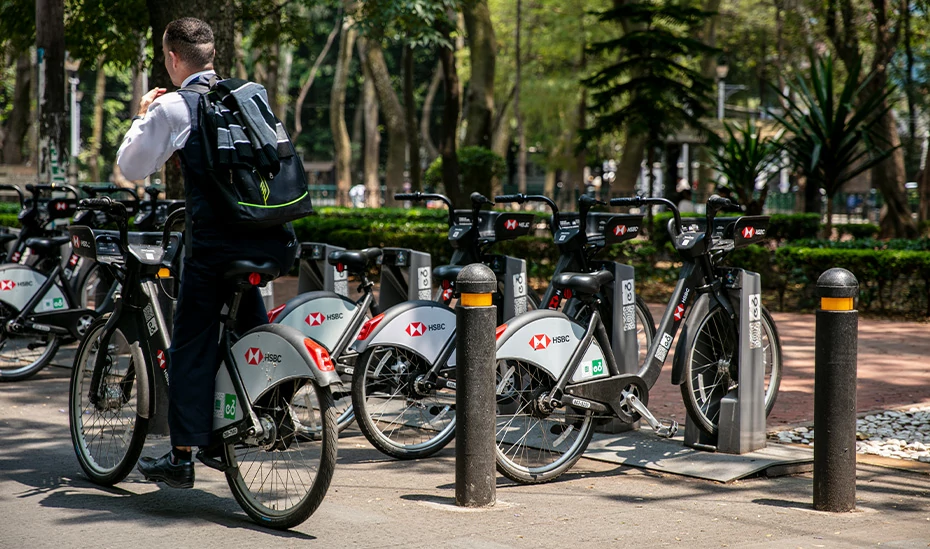
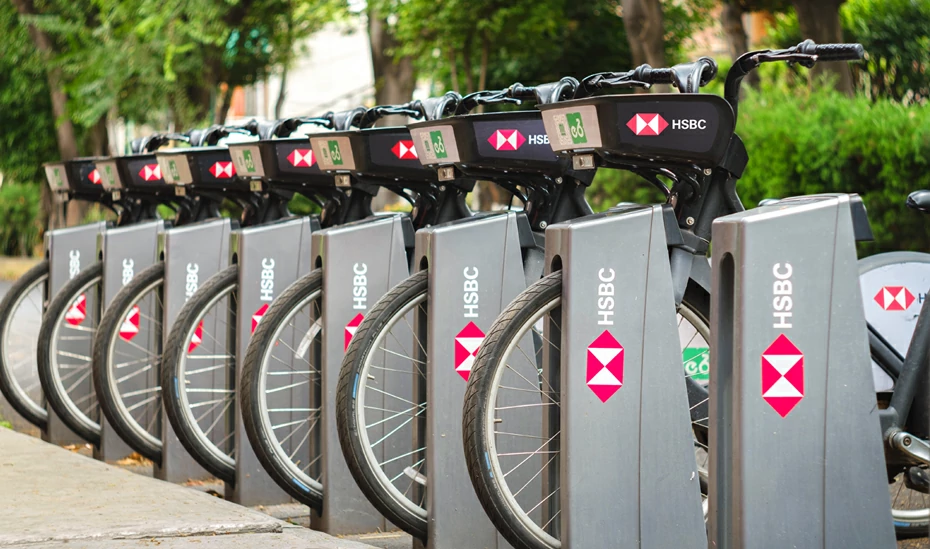
According to SEMOVI, a technical study is underway to identify the areas where the Ecobici bike-sharing system will expand. The initiative aims to double the system’s coverage ahead of the 2026 FIFA World Cup. Currently, Ecobici operates 689 docking stations and 9,300 bicycles. Additionally, the first fleet expansion has already been approved, with new bikes expected to arrive early next year.
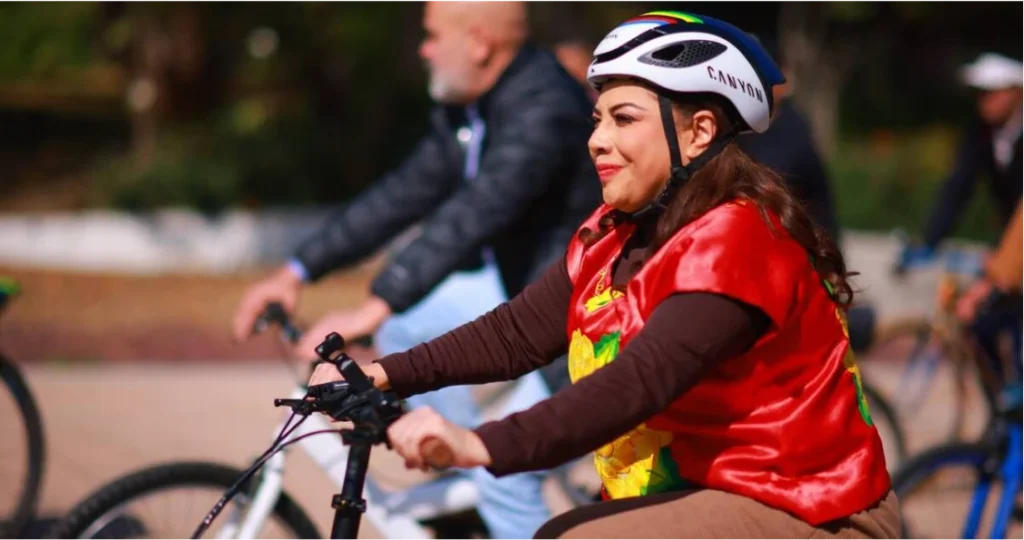
Speaking during World Bicycle Day, Mayor Clara Brugada said cycling is gaining momentum in Mexico City, with 456,892 daily cycling trips, a 71% increase since 2018. She highlighted that cars emit 7.2–11.7 lb of CO₂ daily, and bicycles produce none. In this context, Bike Lanes: An urban Driver of Local Economic Growth highlights how the expansion of cycling infrastructure not only supports sustainable mobility and emissions reduction but also contributes to increased commercial activity, improved accessibility for local businesses, and stronger neighborhood economies.
Ecobici Expansion and New Cycling Infrastructure Strengthen Sustainable Mobility in Mexico City
According to Clara Brugada, the Ecobici bike-sharing system will grow to 15,000 bicycles ahead of the 2026 FIFA World Cup and later expand to 20,000 units, bringing the service to additional areas of the capital. In addition, Mobility Secretary Héctor Ulises García Nieto stated that the city’s cycling plan is based on three core priorities—maintaining, improving, and expanding bike lanes—throughout Mexico City.
The plan also includes the construction of new large-capacity bike racks in Buenavista, Escuadrón 201, Martín Carrera, Olivos, El Rosario, and Tláhuac neighborhoods, all strategically connected to the Metro and Metrobús systems. Furthermore, six additional bike parking hubs are scheduled to open in 2026 in Huipulco, Universidad, and the Tasqueña Transfer Hub (CETRAM), making it easier for cyclists to combine biking with public transportation.
A City Moving Forward on Two Wheels
The expansion of Ecobici Bike-Sharing System and the growth of Mexico City’s cycling network are paving the way for a major shift in urban mobility—one that relies less on private vehicles and prioritizes people-centered transportation. Moreover, this transformation goes far beyond the 2026 FIFA World Cup, marking the beginning of a more sustainable future for the city.
The expansion of bike lanes goes beyond public policy—it represents a clear commitment to a people-centered mobility model that reclaims public space and creates a lasting legacy beyond the 2026 FIFA World Cup. Investing in this transformation means investing in a cleaner, more connected, and more accessible city, where a continued commitment to cycling infrastructure paves the way toward a better future.