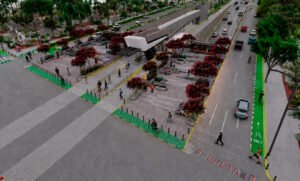

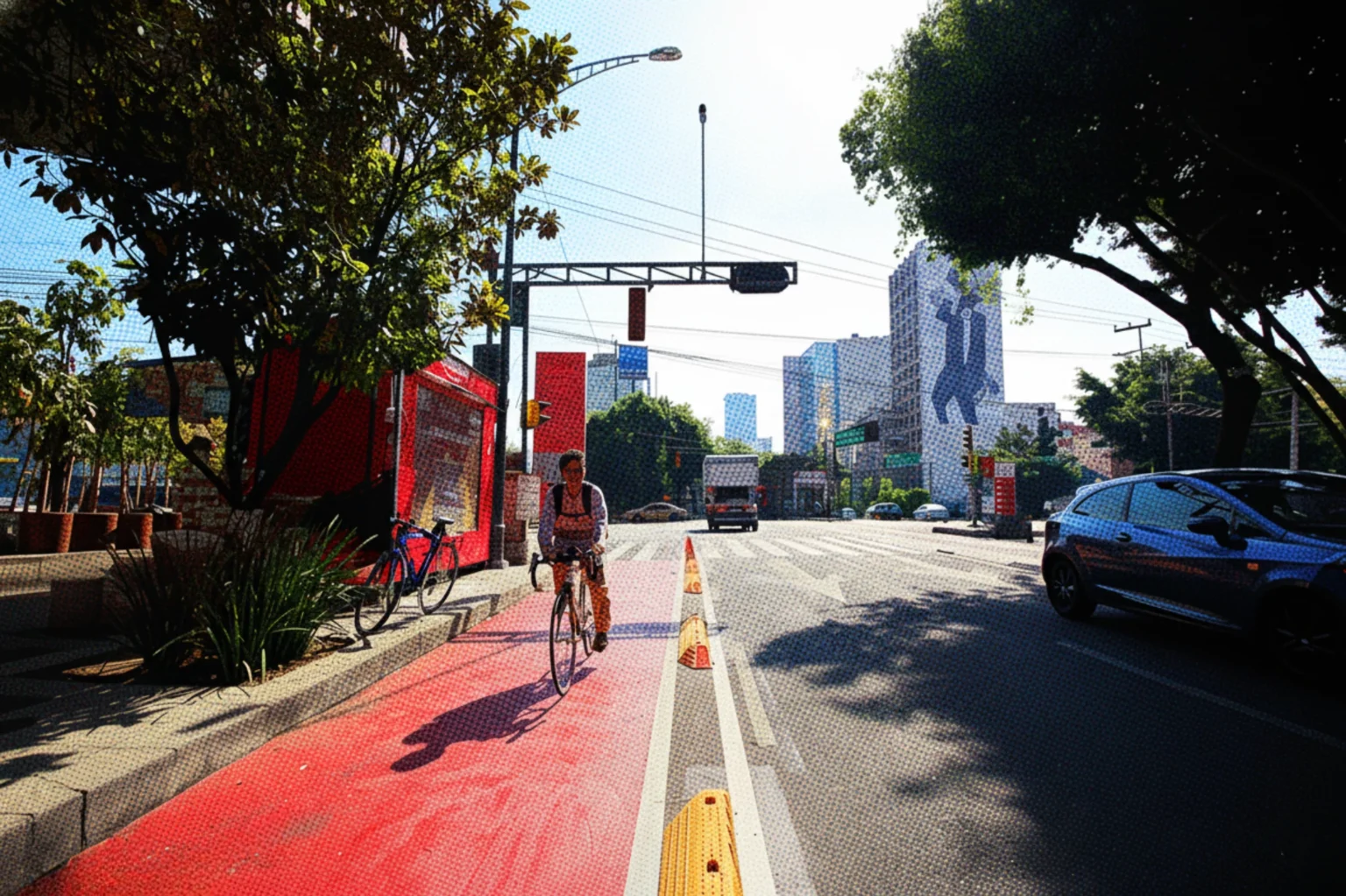
The Insurgentes Sur Cycling Corridor has become one of Mexico City’s most important cycling routes; however, it began as a temporary response to an extraordinary moment. Over time, what started as a provisional lane evolved into a key cycling corridor, now used daily by thousands of people traveling along one of the city’s busiest avenues. Ultimately, this transformation shows how urban habits can change when safe, visible, and consistent infrastructure responds effectively to new mobility needs.
Insurgentes Sur Cycling Corridor: An Avenue Ready for Change
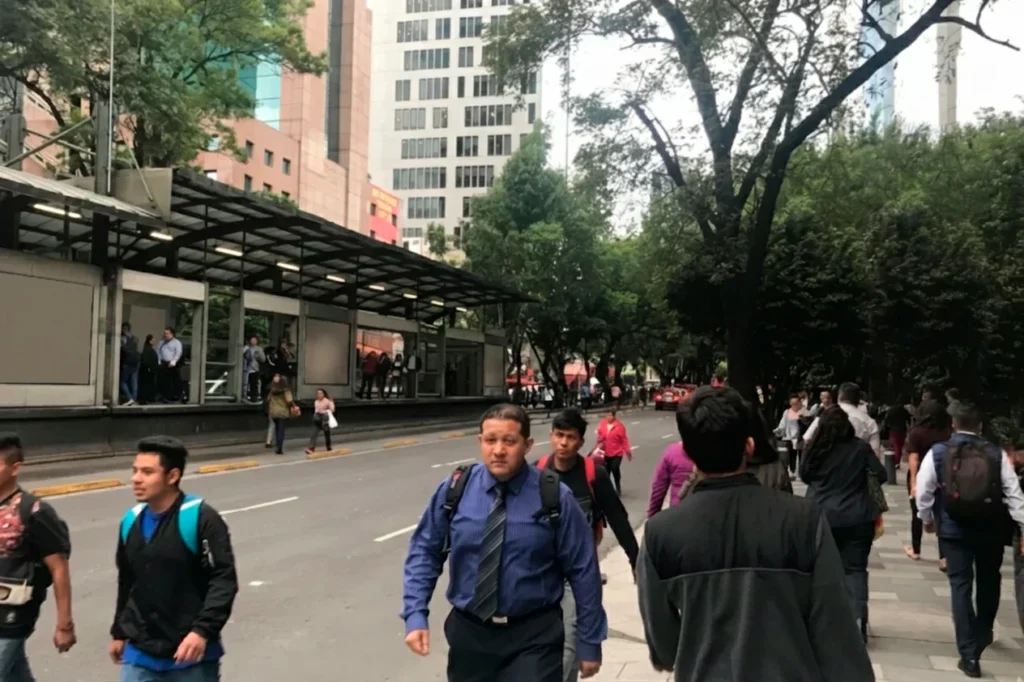
Insurgentes Sur has always been a complex corridor, with heavy traffic, continuous business activity, commercial areas on both sides of the avenue, and constant demand for public transportation. Before 2020, anyone seeking to travel along the avenue by bicycle had to navigate between four lanes of traffic in each direction with virtually no protection. The route was long, straight, and strategically important. Nevertheless, the lack of cycling infrastructure severely limited its everyday use. As a result, the need for a dedicated corridor like the current Insurgentes Sur Bike Lane became increasingly evident. As a result, the need for a dedicated corridor like the current Insurgentes Sur Bike Lane became increasingly evident.
Between 2004 and 2005, Metrobús Line 1, Mexico City’s bus rapid transit (BRT) system, was built along Insurgentes Avenue, and in 2017–2018, sidewalks and pedestrian spaces were redesigned. Even so, the corridor still lacked a safe cycling lane capable of balancing different mobility needs and providing dedicated space for cyclists.
The Creation of the Insurgentes Sur Cycling Corridor
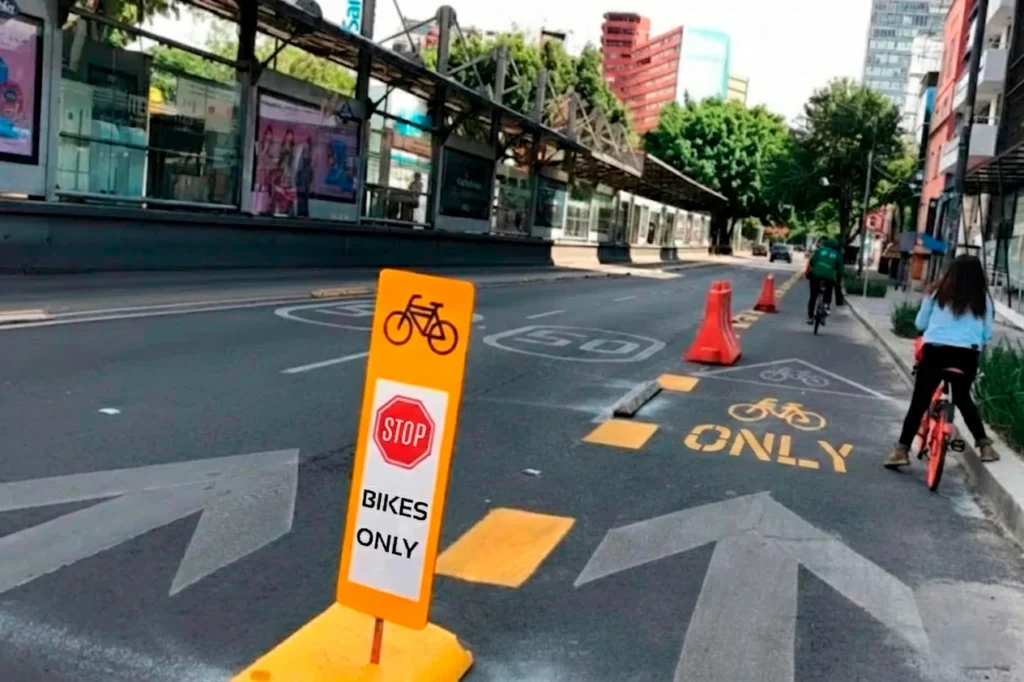
May 31, 2020 marked a turning point. With fewer trips being made during the pandemic and the need for safe alternatives to public transportation, the city implemented an emergency bike lane along Insurgentes. A total of 25 miles of temporary cycling infrastructure were created, making it the longest emergency route established during that period and providing an initial glimpse of what would later become the permanent Insurgentes Sur Bike Lane.
During the initial stage, the bike lane relied on temporary signage, road markings, and basic delineators that provided limited protection, insufficient for an avenue with such heavy traffic. These elements failed to create a clear, continuous barrier separating cyclists from motor vehicles. As cycling demand increased, reinforcing the corridor became imperative.
A Transformation Driven by Growth
In the months following the opening of the Insurgentes Sur Cycling Corridor, cycling activity along the corridor increased significantly. Counts rose from 1,996 to 7,494 users per peak hour between April and November 2021—a 275% increase that underscored the route’s importance during the economic recovery period.
The avenue began to transform: more bicycles, clearer crossings, and a more predictable interaction with public transportation. Additionally, surveys reinforced this perception:
- The results showed strong public support: 95% of cyclists favored its permanence
- 73% of Metrobús users agreed that the bike lane was needed
- At the same time, most businesses did not report negative impacts, and some even saw an increase in customer activity
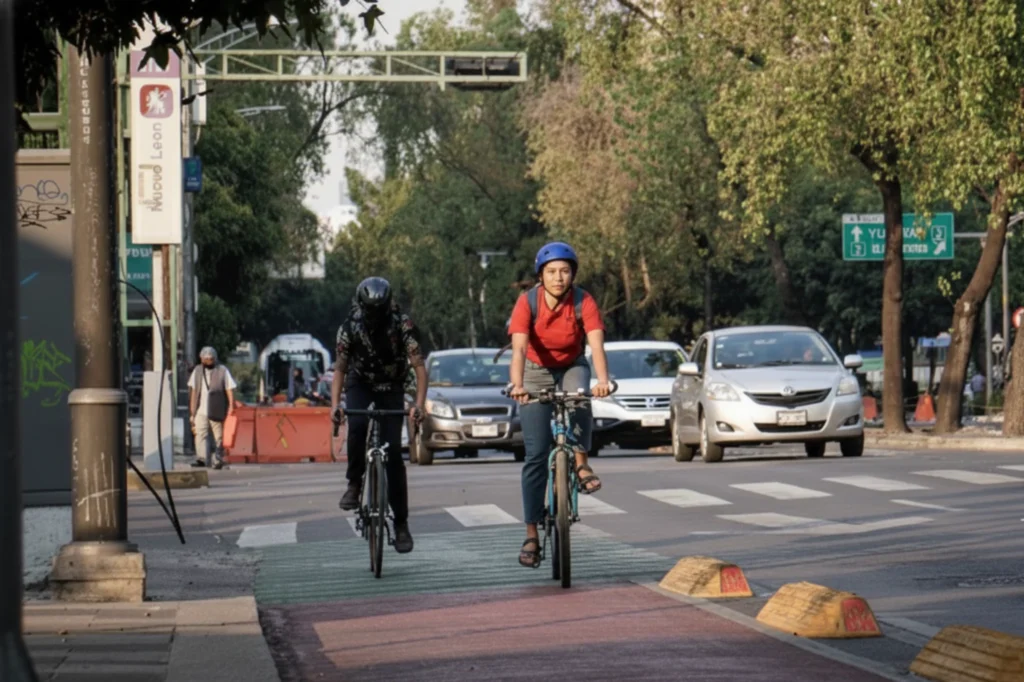
Over time, the discussion moved beyond whether it should stay. Instead, the Insurgentes Sur Bike Lane became a natural and integrated part of the corridor.
Insurgentes Sur’s Journey Toward Permanence
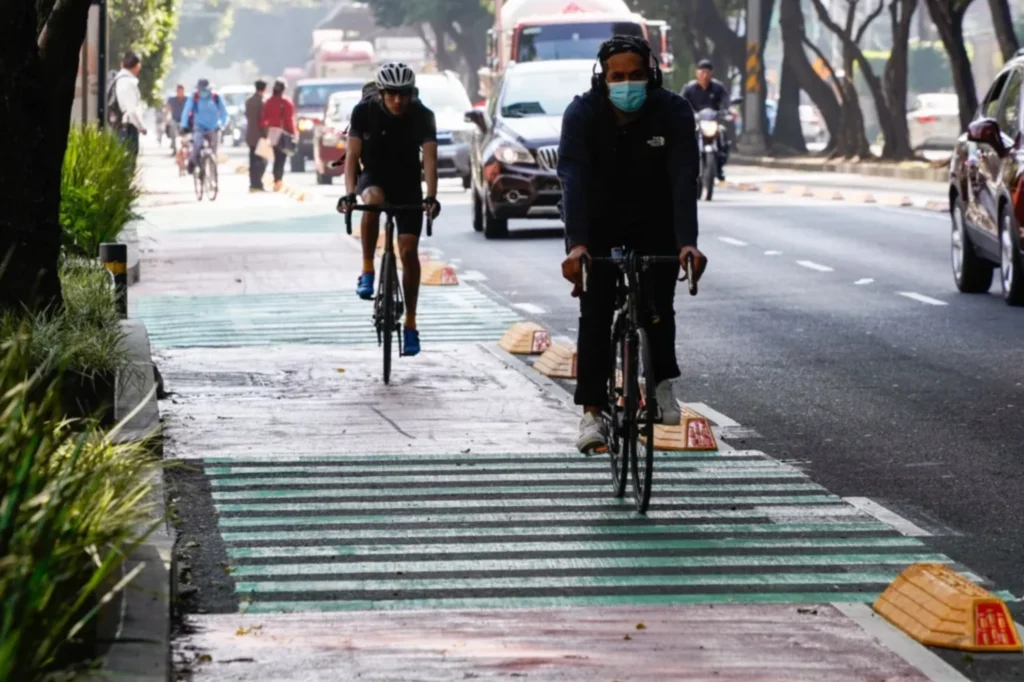
As mobility patterns returned to normal, the bike lane continued to see high usage, reinforcing the need to make it a permanent corridor. In 2021, the temporary infrastructure was upgraded to enhance safety and continuity. Basic delineators were replaced with H7 Bike Lane Delineators, creating a more stable and visible separation from motor traffic. Intersections, signage, and lane geometry were also adjusted to help the corridor better accommodate the avenue’s daily traffic flow.
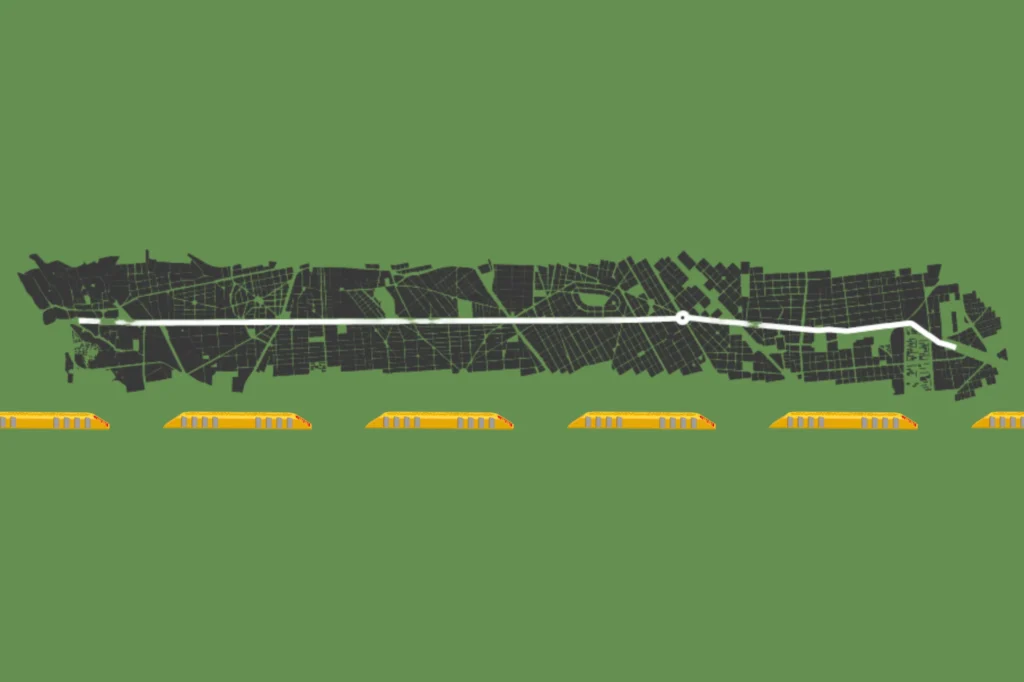
By 2022, the route was officially inaugurated as permanent infrastructure, spanning 18 protected miles and built with materials designed for long-term use. The bike lane established a continuous corridor through the boroughs of Gustavo A. Madero, Cuauhtémoc, Benito Juárez, and Coyoacán, ultimately becoming a vital north–south connector along an avenue once dominated by cars and mass transit.
A New Way to Experience Insurgentes Avenue
Reducing vehicle lanes—from four to two in each direction—allowed for the integration of a dedicated Metrobús lane and a protected cycling lane, completely reshaping how the avenue operates. This redistribution of road space created a more balanced urban environment and improved accessibility for pedestrians and cyclists.
The Insurgentes Sur Cycling Corridor also became connected to other major cycling corridors, including Reforma, Chapultepec, Medellín, Álvaro Obregón, and Trolebici routes. These connections made the route more effective for longer trips and multimodal mobility, allowing cyclists to combine bicycle travel with Metrobús service at stations such as Félix Cuevas, Nuevo León, and La Piedad.
An Urban Impact That Can Be Felt
This project has a direct impact on more than 343,000 residents in its surrounding area. Along the corridor, more than 8.7 miles were upgraded to improve pedestrian access, strengthen road safety, and reshape the way people interact with the street every day.
The constant presence of cyclists boosted urban activity, reinforced perceptions of safety, and fostered a more dynamic environment along the avenue. The Insurgentes Sur Bike Lane became a key instrument for improving mobility and revitalizing the corridor.
A Route Inspiring Change Beyond the City
The success of this corridor has sparked interest in other cities. In Guadalajara, an examination of the Javier Mina Cycling Corridor shows how a well-designed corridor can reorganize urban flow and improve everyday travel.
The Urban Bikeway Design Guide by NACTO (National Association of City Transportation Officials) is a specialized resource that brings together design principles, strategies, and examples for creating safe, comfortable, and connected urban cycling infrastructure. It aims to help cities develop bicycle mobility networks that work for people of different ages, abilities, and user profiles.
A Transformation That Is Here to Stay
The Insurgentes Sur Cycling Corridor marks a major transformation in urban mobility. What began not as a large-scale project but as an urgent response quickly proved its worth through daily use. Today, the corridor stands as essential infrastructure—facilitating everyday trips, linking neighborhoods, and reshaping one of Mexico’s most important avenues.
The project’s development demonstrates that with safe, visible, and well-connected infrastructure, cycling can become a practical, efficient, and reliable solution for urban mobility.