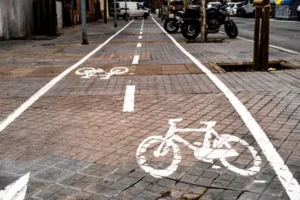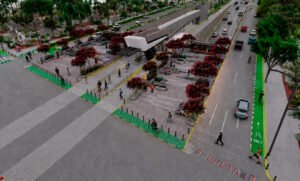

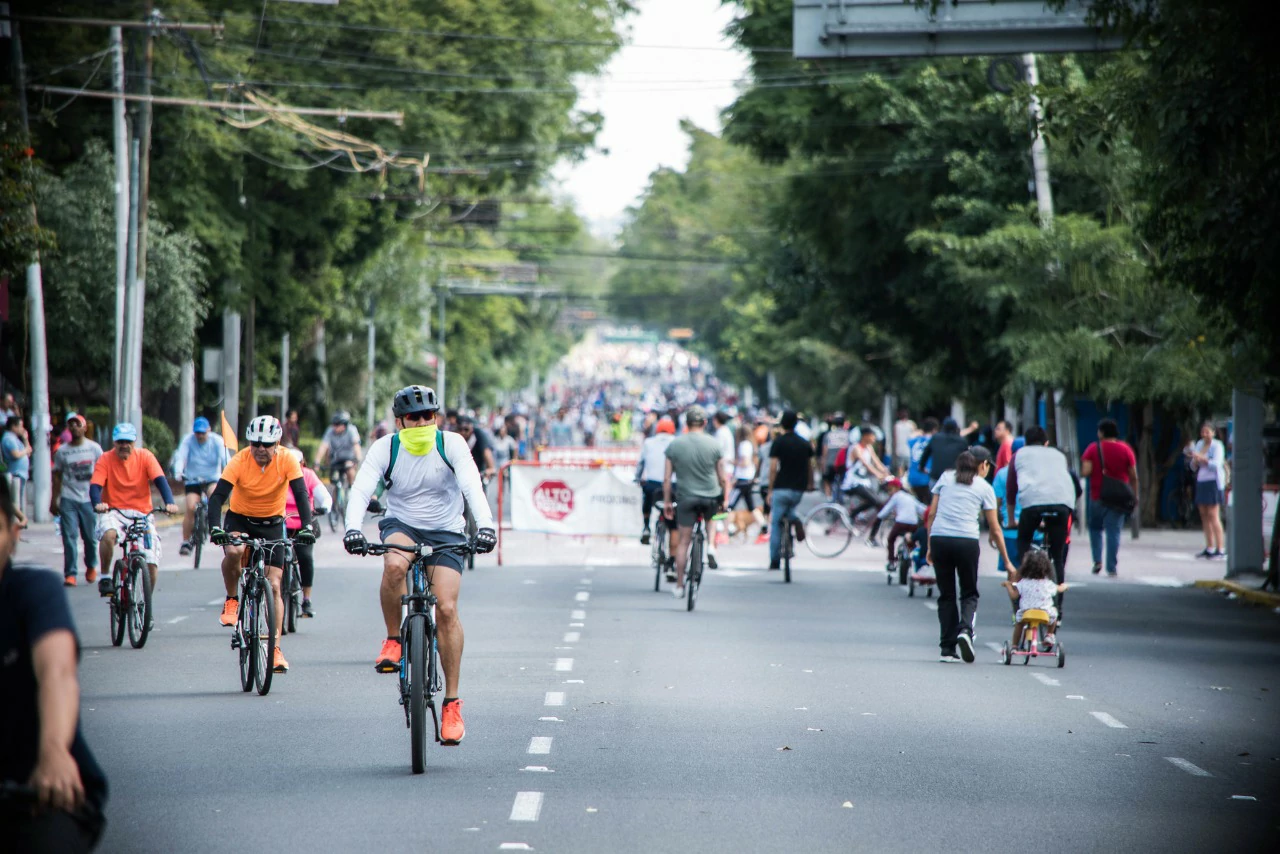
Nicknamed The Pearl of Guadalajara, the conurbation has positioned itself as one of Mexico’s leading cycling cities. As a result, the transformation is remarkable: in just six years, the city doubled the bike lane network, creating more opportunities for people to move around on two wheels.
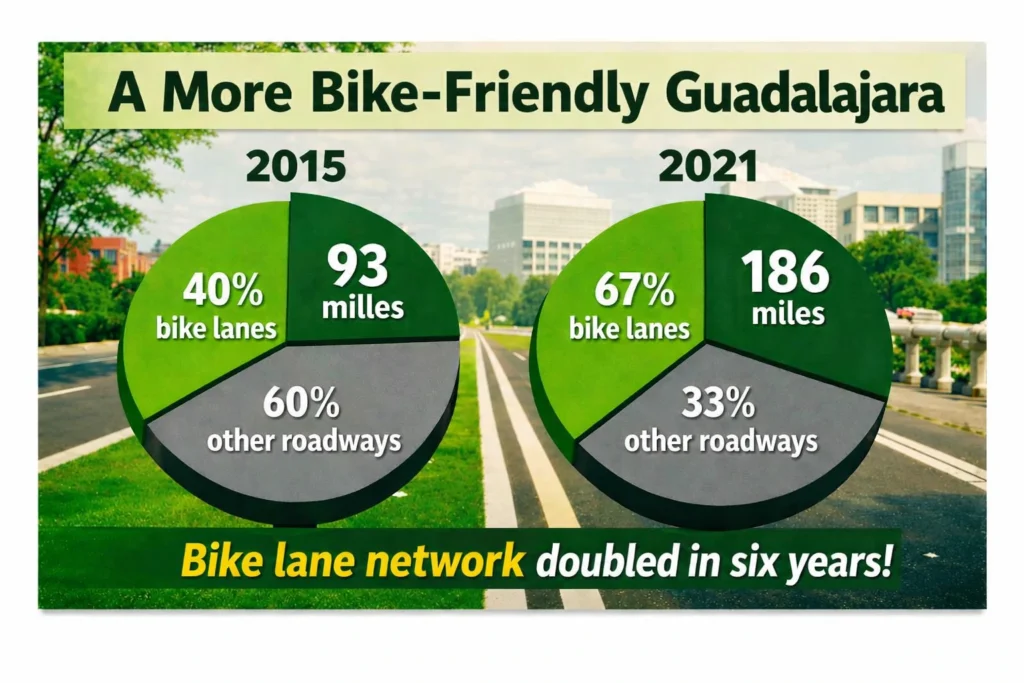
This shift was driven by municipal and state initiatives aimed at creating a more active and sustainable mobility model, with a greater focus on expanding cycling infrastructure and encouraging people to choose bicycles over cars.
These initiatives have helped the Guadalajara Urbanized Area more than double its cycling network over the last six years.
In 2019, 111 miles of cycling infrastructure were reported. By 2024, this figure had increased to 264 miles, according to data from MIDE Jalisco and the Metropolitan Agency for Infrastructure and Mobility (AMIM).
As a result, cycling infrastructure in this area saw a remarkable 139% growth over the past six years. Furthermore, of the more than 249 miles now available, 157 miles were added between 2020 and 2024.
New Bike Lanes in Guadalajara: What Are the Latest Routes?
Although new bike lanes were built in Guadalajara during this six-year period, existing cycling infrastructure was also expanded with additional sections.
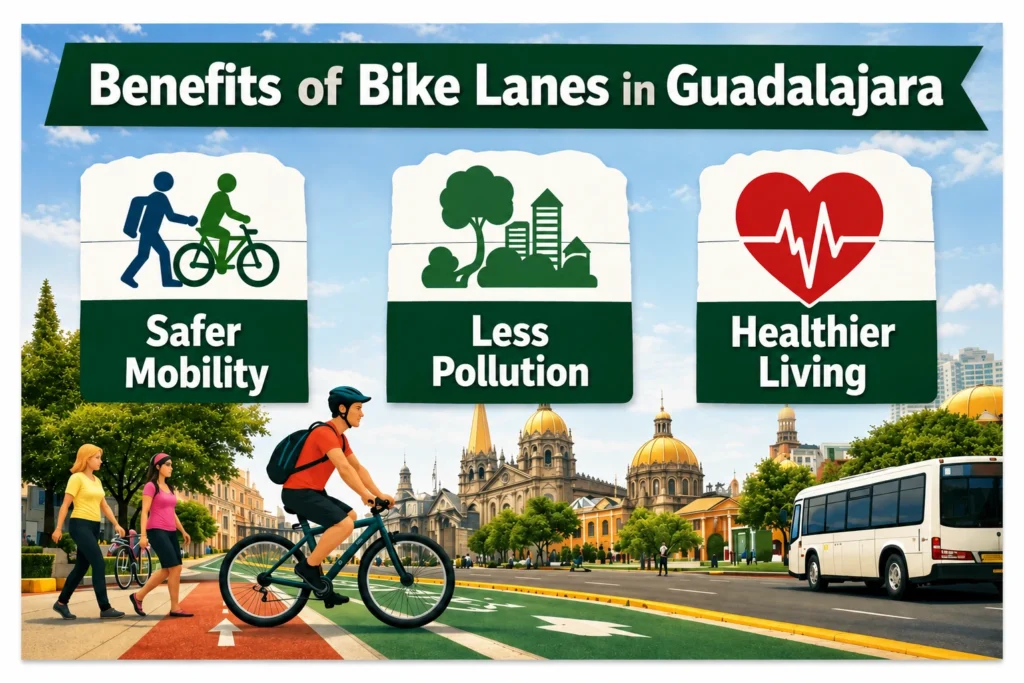
Among Guadalajara’s latest cycling infrastructure projects are the Prolongación Mariano Otero bike lane in Zapopan, the Javier Mina Avenue cycling corridor connecting Tetlán to Calzada Independencia with 4 miles of dedicated space, and the four-kilometer extension of the Paseo Alcalde bike lane to Agua Azul Park in Guadalajara.
In addition, Guadalajara has developed other segregated mobility lanes that, while not reserved exclusively for cyclists, provide space for both bicycle users and public transit. A notable example is the bus-bike lane between Victoriano Salado Álvarez and Contreras Medellín, a 2 miles corridor designed to improve urban mobility options.
Zapopan: A Model for Cycling Mobility
Alongside Guadalajara, Zapopan has emerged as another example of commitment to sustainable mobility, recognizing cycling as a key tool for creating more connected and environmentally friendly cities.
According to AMIM’s latest Metropolitan Cycling Mobility Report, Zapopan increased its cycling infrastructure by 38.9% between 2020 and 2023, nearly matching Guadalajara’s growth rate, which was only 0.3 percentage points higher over the same period.
In addition, Tlajomulco de Zúñiga played a role in strengthening the region’s cycling infrastructure, increasing its network of bike lanes by 14.87%.
These achievements highlight Guadalajara’s commitment to becoming a leading cycling city in Mexico. However, expanding infrastructure is only part of the solution; authorities must also create safer streets and strengthen cyclist protection both inside and outside bike lanes.
This goal can be achieved by developing well-marked, properly protected bike lanes and a better-connected cycling network. Though the infrastructure alone is not enough: cyclists must also follow traffic rules and contribute to safer streets. Ultimately, mobility is something we create together.