

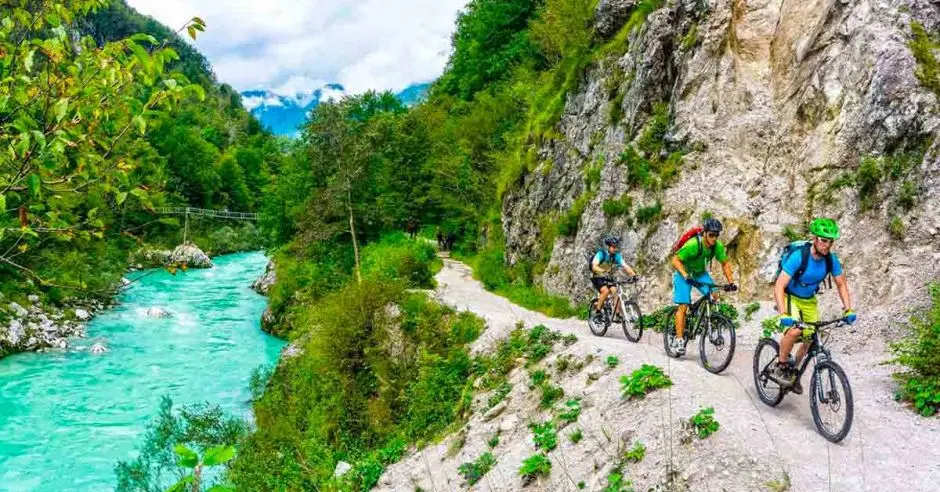
July 2024 ended with the inauguration of the impressive Trans Dinarica Transnational Cycling Trail, a new long-distance cycling route connecting no fewer than eight European countries. As a result, this remarkable project has become one of the most important cycling infrastructure of the continent.
Stretching approximately 3,100 miles, the cycling route crosses Croatia, Bosnia and Herzegovina, Montenegro, Albania, North Macedonia, Kosovo, Serbia and Slovenia.
Along the way, cyclists travel through an extraordinary variety of landscapes, including national parks, forests, rural villages, low-traffic roads, existing cycling routes, the Western Balkans, and the Adriatic Coast.
Moreover, the Trans Dinarica Transnational Cycling Trail delivers unique cycling experiences by combining breathtaking natural scenery, historic cities, and vibrant urban environments. In this way, the cycling route serves as both a physical and cultural link between the participating countries.

Beyond recreation, the project also creates new tourism opportunities throughout the region. One of its primary goals is to encourage travelers to visit small towns and villages, contribuiting to long-term sustainable economic growth.
The cycling route is divided into 31-mile sections, and each stage ends near locations where cyclists con rest, eat, and find accomodations.
Through this approach, project developer GoodTrail aims to generate economic benefits for local communities. Rather than simply riding from one destination to another, cyclists are encouraged to stop and explore attractions across Croatia, Serbia, Albania, Montenegro, and neighbouring countries.
How did the New Trans Dinarica Transnational Cycling Trail come about?
The concept dates back to 2016, when three tour operators envisioned a cycling corridor across the Western Balkans. The objective was to combine bicycle tourism with the region’s rich cultural heritage and encourage more visitors to explore UNESCO World Heritage Sites, traditional villages, and national parks.
After nearly eight years of planning and development, the route officially opened at the end of June 2024. Today, it provides an environmentally friendly alternative to motorized transportation while strengthening regional connectivity.
Furthermore, the project creates a safe cycling connection between multiple countries, boosts tourism, and stimulates local economies.
In addition, promoting access to cultural and natural destinations may encourage regional authorities to invest in improved transportation infrastructure. As a result, the growth of sustainable tourism could benefit not only cycling routes but also other mobility systems in the area.s planned that with this project, more people would know and visit the sites of UNESCO, villages, and national parks of the zone.