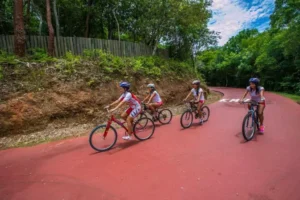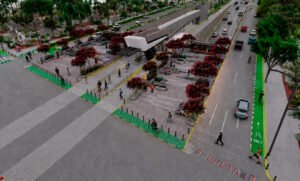


Governor Alejandro Armenta announced plans to transform Puebla’s bike lanes from recreational corridors into an integrated urban transportation network. The proposal focuses on rehabilitating and connecting the existing cycling infrastructure to achieve better bike lane connectivity and improve everyday mobility across the state.
According to Armenta, the plan is to create a connected cycling corridor that enables Puebla residents to travel safely and efficiently by bicycle.
“We are currently working to connect Puebla’s bike lanes. A comprehensive plan will soon be introduced to turn them into an integrated transportation and mobility system,” Alejandro Armenta said.
In addition, Puebla’s mayor, Pepe Chedraui, announced that the City Government will support the initiative. The city is awaiting the implementation plan, which will pave the way for the development of a public bike-sharing system.
Puebla’s Bike Lanes: An Essential Part of Urban Mobility
In recent years, Puebla’s bike lane network has undergone significant development. For example, the 3.4 miles Hermanos Serdán Bike Lane was rehabilitated. In addition, by the end of 2024, maintenance had been completed on the city’s existing cycling infrastructure, and 18 miles of new bike lanes were built in the city.
However, last year, Armenta stated that US$2,856,500 would be allocated for bike lanes after completing the ruling to interconnect them. He emphasized that none of them would be destroyed; instead, the necessary cycling infrastructure would be built to adapt and integrate them.
At the end of April 2025, Armenta announced that, before the Easter holidays, he had given José Manuel Contreras de los Santos a 15-day deadline to unveil the bike lane connectivity project and open it to public feedback.
Based on these developments, it appears that the plan to connect Puebla’s bike lane network is moving forward—perhaps slowly, but steadily. It would be unfortunate if the project were simply delayed indefinitely.
Ultimately, connecting the state’s bike lane network is both a necessity and a priority—not only to provide cyclists with more efficient transportation, but also to improve their safety.
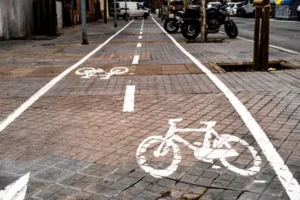
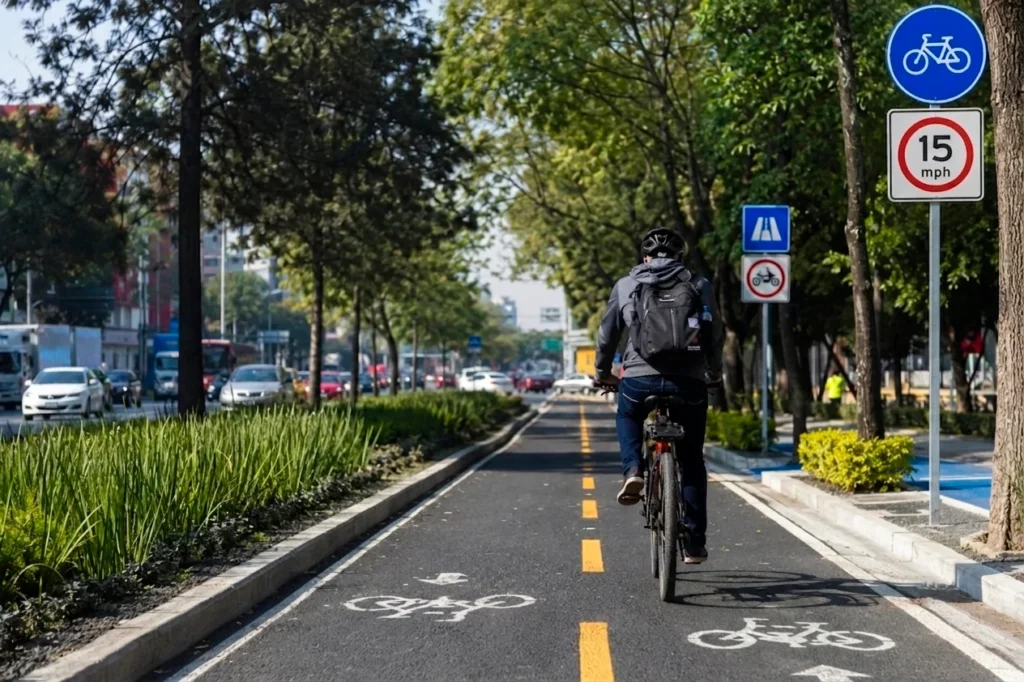
It is important to note that simply painting and marking a bike lane is not enough, as motorists often fail to respect it. Dedicated, physically separated bike lanes are crucial for safely distinguishing bicycle traffic from motor vehicles. In addition, proper street lighting and adequate bike lane signage must be installed along all sections.
Taking cycling seriously
Although bicycles are often used for recreational purposes, such as short rides for leisure and relaxation, it is time to recognize them as a serious mode of transportation.
More than just a sustainable mode of transport, the bicycle is a vehicle, and cyclists have the right to move quickly and safely on the roads where cycling is allowed.
For this reason, beyond being a recreational activity, the bicycle is also a means of transport and even a tool for work. Many people use it to commute to their jobs, while for others it is their main source of work, such as delivery riders or those who transport tools and raw materials from one place to another.
Connecting Puebla’s bike lanes will make life easier for many residents by providing safer cycling routes. That is why it is important for this project to begin as soon as possible, ensuring better bike lane connectivity across the city.