
Building a bike lane is a task that should not be taken lightly; on the contrary, it is essential to consider all safety measures that ensure safe travel for cyclists.
Among the key factors to consider is proper bike lane planning —that is, determining the route, the avenues it will follow, and the points of interest it will connect. A bike lane, in addition to being safe, must also be useful for urban mobility.
Cycling infrastructure that does not connect to a wider network and offers no protection for cyclists ultimately provides little value. Consequently, a mobility study should be conducted before construction to assess whether the proposed intervention is justified.
But once the need for a bike lane has been established, the next step is selecting the right bike lane protection solutions for implementation. Below are some of the most effective options to consider.

Traffic Control Devices For Building A Bike Lane
As we mentioned before, a cycle path must ensure safety of cyclist, this means that, it must maintain physically separated the vehicle transit, for that, the bike lane requires of elements that doesn’t allow the invasion of this to drivers.
At the same time, these traffic control devices should enhance cyclist safety rather than create additional risks. In addition to guiding traffic, they can help reduce the severity of injuries if a collision occurs.
This is a list of recommended lane separation solutions for building a bike lane:
H7 Bike Lane Delineator
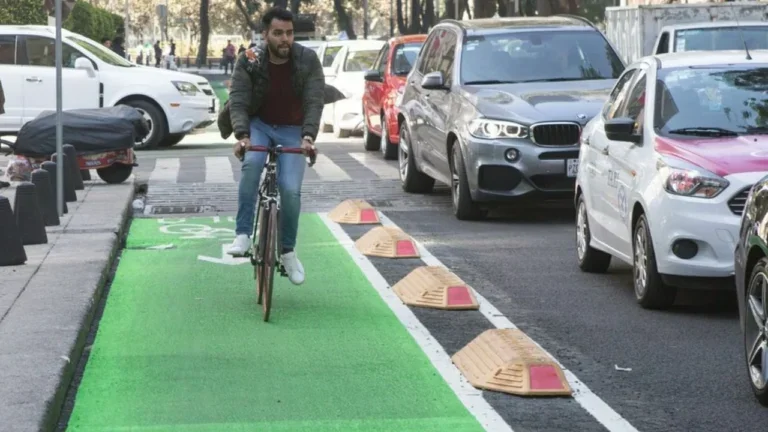
Today, lane delineators are one of the most effective solutions for developing protected bike lanes. Designed to separate bicycle traffic from motor vehicles, they create a durable physical barrier while integrating seamlessly into the urban landscape.
The trapezoidal profile and three internal ramped surfaces help reduce the risk of skidding or sudden impacts when cyclists accidentally ride over the H7 Bike Lane Delineator. Additionally, the raised sections are manufactured from a soft, non-slip compound that helps protect bicycle tires from damage.
On the contrary, the flat outer surface is strong enough to prevent vehicles from encroaching on the bike lane. It also features multiple angles and reflective areas that become visible at night when illuminated by car headlights.

Kayak Channelizer
This versatile solution serves the same purpose as the H7-25 or H7-40 Bike Lane Delineator. What sets it apart is the Kayak Channelizer’s more refined appearance, which is less visually intrusive while maintaining the same level of effectiveness.
Sufficient height helps deter motorists from encroaching on the bike lane. Moreover, the kayak-shaped profile enhances functionality and cyclist safety, as riding over the channelizer does not puncture bicycle tires.
The solar-powered version features a polycarbonate bead containing an internal LED light that turns on at dusk, creating an illuminated bike lane.

Mini Top 445 Lane Separator with Delineator Post
A small lane separator, less than 19.7 inches in length and about 1.7 inches in height, makes it suitable for bike lanes in confined spaces. The unit is also paired with a delineator post slightly over 23.6 inches tall, which enhances visibility, reinforces its visibility, and helps prevent vehicles from entering the cyclists’ exclusive zone.
It is worth noting that the delineator post is flexible, so it does not pose a risk to vehicle bodywork.

Forte Lane Separator
A lane separator in pyramidal shape with five reflective bands, making it ideal for improving visibility in any bike lane.
The pyramid shape deters vehicles from encroaching on the bike lane; therefore, although smaller than H7 Channelizers, it is still a durable element for bike lane construction.

Tripare and 51 C-3 Lane Separator
Another option is to install a channelizer with a Tripare Lane Separator or a 51 C-3 Lane Separator With Delineator Post. Both are effective for channeling shared lanes where cyclists and public transport operate.
Additionally, the height of these traffic control devices makes them highly visible and helps indicate the presence of dedicated lanes where private vehicles are not allowed to circulate.