
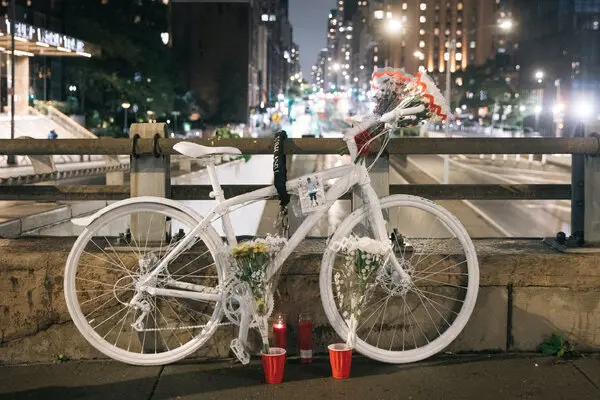
Every day, that white bicycle remains attached to a roadside pole, watching other bikes—full of color and life—roll across the pavement where another ride will never begin. Since the day a cyclist lost their life, this ghost bike has stood as a public memorial. Yet, despite remaining in plain sight, many people pass by without noticing the message behind the white frame.
Whether you are a cyclist, a driver, or simply a passenger, chances are you have seen a white bicycle attached to a bridge or secured to a roadside pole during your travels.
Have you ever wondered why a white bicycle is there or what the memorial represents? In this blog, we take a closer look at the meaning behind ghost bikes and the tragic stories they commemorate.

A White Bicycle: A Symbol of Remembrance and Advocacy
Although cycling continues to grow in popularity, unfortunately, another trend has not declined: the number of cyclists who lose their lives in traffic crashes.
This is not a problem limited to any single country. However, one response has spread around the world: the white bicycle. Within the cycling community, ghost bikes have become powerful symbols of remembrance and advocacy, drawing attention to cyclist fatalities and the need for safer roads.
You may notice these white bicycles in different parts of the city—perhaps, and unfortunately, more often than expected. Their presence serves as a memorial and a piece of collective memory, honoring cyclists who lost their lives and refusing to let those tragedies be forgotten.
Simply put, a white bicycle marks the location where a cyclist was killed in a collision with a motor vehicle.
The leading cause of cyclist fatalities on streets, avenues, and highways is collisions involving motor vehicles. In many cases, cyclists are struck by drivers who ignore traffic laws, such as speeding or running red lights and stop signs. Additionally, some fatal crashes involve impaired drivers who flee the scene after the collision.
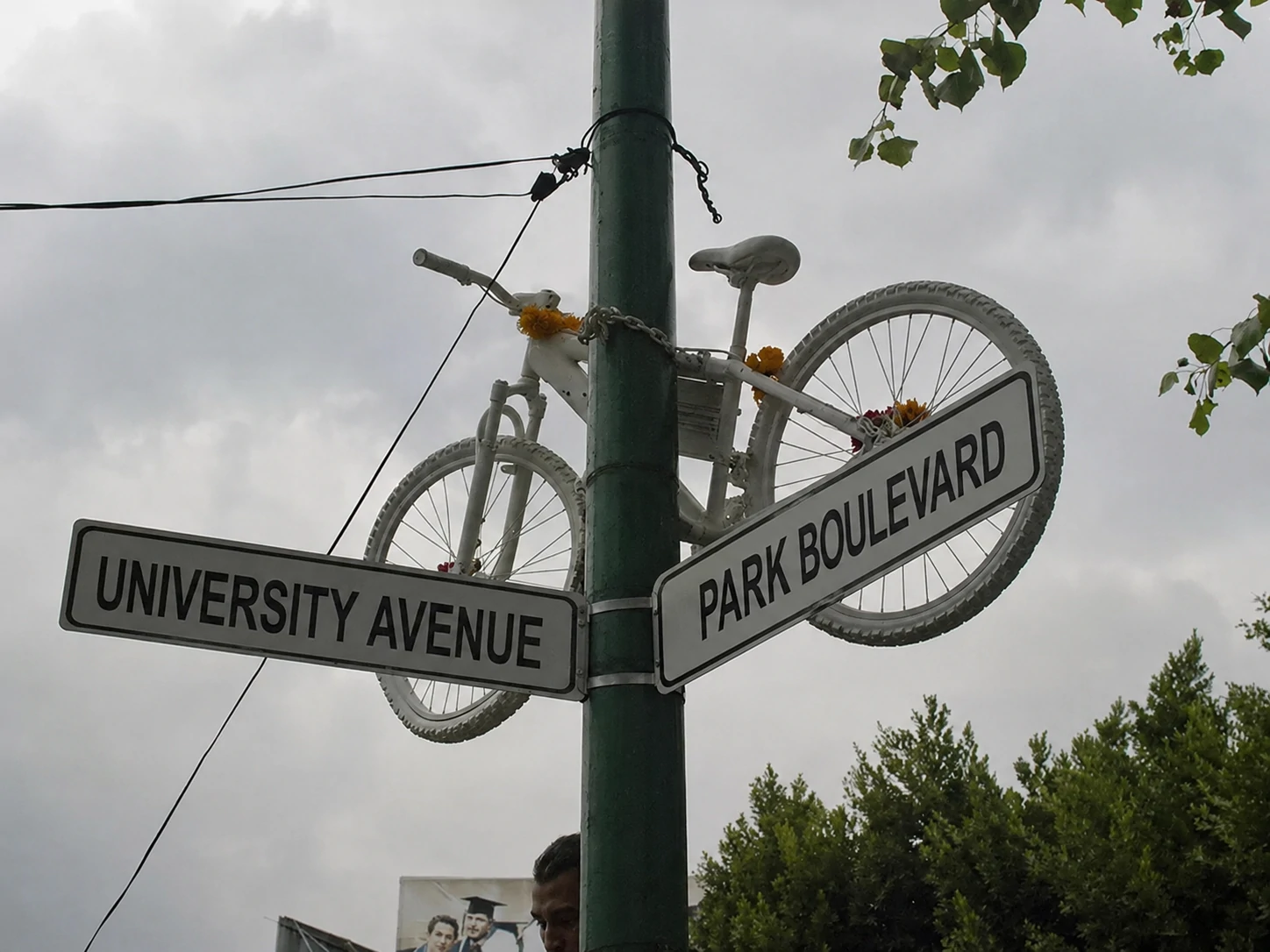
Following a fatal crash, relatives and cycling organizations install a ghost bike, the name given to a bicycle painted white, at the exact spot where the cyclist lost their life.
The Silent Voice of a Ghost Bike
The next time you look out the window of a bus or drive through city streets, take a closer look. You may realize that there are far more ghost bikes across the city than you ever noticed before.
Another purpose of placing a white bicycle is to raise awareness about the alarming frequency of crashes involving non-motorized road users and pedestrians.
A white bicycle is a way to honor the memory of those who lost their lives in traffic collisions and keep their stories alive. At the same time, it serves as a peaceful and respectful form of advocacy, encouraging drivers to act with caution and share the road responsibly.
Although it is a silent form of advocacy, a white bicycle remains visible to everyone. On one hand, it represents the unity of cycling communities. On the other, it reminds us of human vulnerability and how quickly a tragedy can happen anywhere and at any time.
A white bicycle is not just an object; it is a scar across the city and a lasting mark on the collective memory of a society that needs greater awareness of road safety.
White Bicycle: The Painful Irony Behind a New Beginning
Tragedies result more hurtful when irony is present. The case of white bicycles is not immune to this situation.
This movement began in the 1960s in Amsterdam, one of the world’s most recognized cycling cities. The original purpose was simple and well-intentioned: create white bicycles that anyone could ride freely. After finishing a trip, users could leave the bicycle in any location, waiting for the next person to continue the journey.
Years later, it is deeply ironic that a bicycle originally created for everyone to ride has become the symbol of a bicycle that no one will ever ride again. Today, white bicycles represent ghost bikes, memorials that honor cyclists who lost their lives. In 2003, the first white bicycle memorial was placed in Louisiana, USA, honoring Patrick Van Der Tuin, a cyclist who lost his life after being struck by a vehicle. From that moment on, a peaceful movement began, transforming white bicycles into symbols of remembrance and road safety awareness.
The Shocking Numbers
Data from N+, obtained from the Mexico City Attorney General’s Office, reveals that 1,689 cyclists lost their lives in traffic collisions in Mexico City between January 2019 and November 27, 2023.
In addition to these fatalities, the same period recorded 2,234 cyclist injury cases, further showing the serious risks cyclists face in traffic.
In Guadalajara, one of Mexico’s largest cycling cities, the statistics are also concerning. The organization Bicicleta Blanca reports that 328 cyclists have lost their lives since 2009. In 2024 alone, the group recorded 13 cyclist deaths through June 24, while 17 cyclist fatalities were reported in 2023.
It is important to highlight that the organization’s website features a daily updated record of fatal incidents involving cyclists in Guadalajara. The platform also includes a specific registry of deaths, allowing visitors to learn the names of the victims and the circumstances surrounding each case.
Causes and How to Prevent Them
EThere are several causes, although most involve collisions with motor vehicles. However, some deaths do not result from the immediate impact itself, but rather from the cyclist’s fall and the subsequent impact with the asphalt or concrete surface.
Even so, most collisions involving cyclists and cyclist fatalities are associated with inadequate or nonexistent cycling infrastructure. They are also linked to poor or nonexistent bike lane planning, as well as the lack of training for public and private vehicle drivers, among other factors.
This is why one of the most important solutions to this unfortunate problem is precisely the creation of increasingly extensive and better-designed cycling infrastructure. Such infrastructure must be properly designed, planned, and implemented in accordance with specific bikeway products. and standards.
In the end, every day we hope to see more bicycles in the world, while wishing for a future with fewer white bikes.