
We often understand that, at least from a legal standpoint, pedestrians have priority on the road. But do you know why? The answer can be found in the Mobility Pyramid.
During today’s ride, we’ll explain everything you need to know about this framework. Join us—you may not realize it, but you are always part of the mobility system. Discover which level you belong to within the Mobility Pyramid.
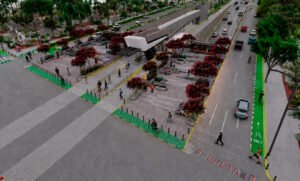
Implementing the mobility pyramid leads to more sustainable, safe, and livable cities, encouraging active lifestyles, reducing pollution, and optimizing urban space usage. It also supports the Green Deal objectives by aligning transport planning with emissions reduction and societal well-being.
What Is the Mobility Pyramid and Why Does It Matter?
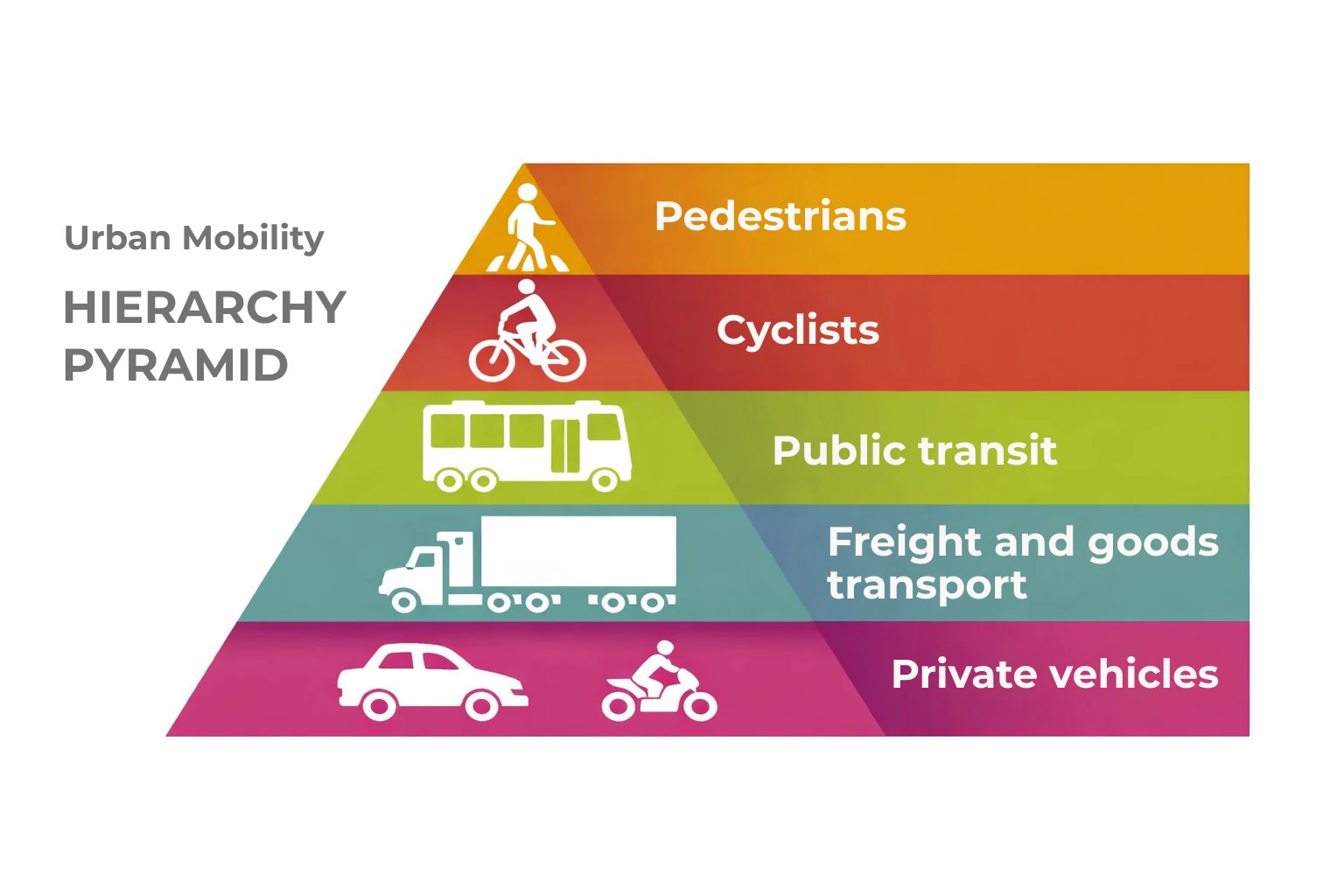
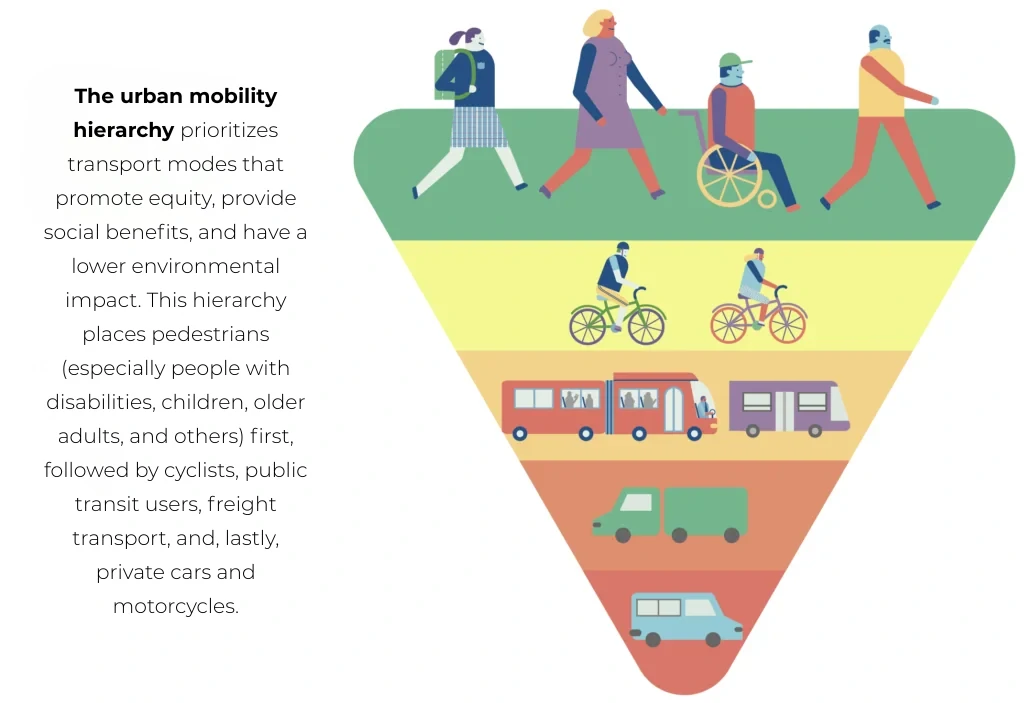
The mobility pyramid is a hierarchical framework that prioritizes transport modes based on sustainability, efficiency, and social equity, placing pedestrians and cyclists at the top and private cars at the bottom.
The mobility pyramid is a conceptual model used in urban planning to promote sustainable and equitable transportation. It ranks transport modes according to their environmental impact, efficiency, and societal benefits, guiding cities to prioritize transport modes that are less polluting, safer, and more space-efficient. The pyramid is often depicted as an inverted pyramid, where the most vulnerable and environmentally friendly transport modes occupy the top, and the least sustainable modes, like private cars, occupy the base.
How Is Mobility Hierarchy Measured?
To determine how each transport mode should be positioned within the Mobility Pyramid, three key factors must be considered: 1) right of way, 2) the environmental impact of each mode, and 3) public investment policies for transportation infrastructure.
This means considering three factors: which transport mode has greater priority on the streets, how much pollution it generates, and the infrastructure required for circulation. The latter also includes exposure to road dangers.
Who Belongs to Each Level of the Mobility Pyramid
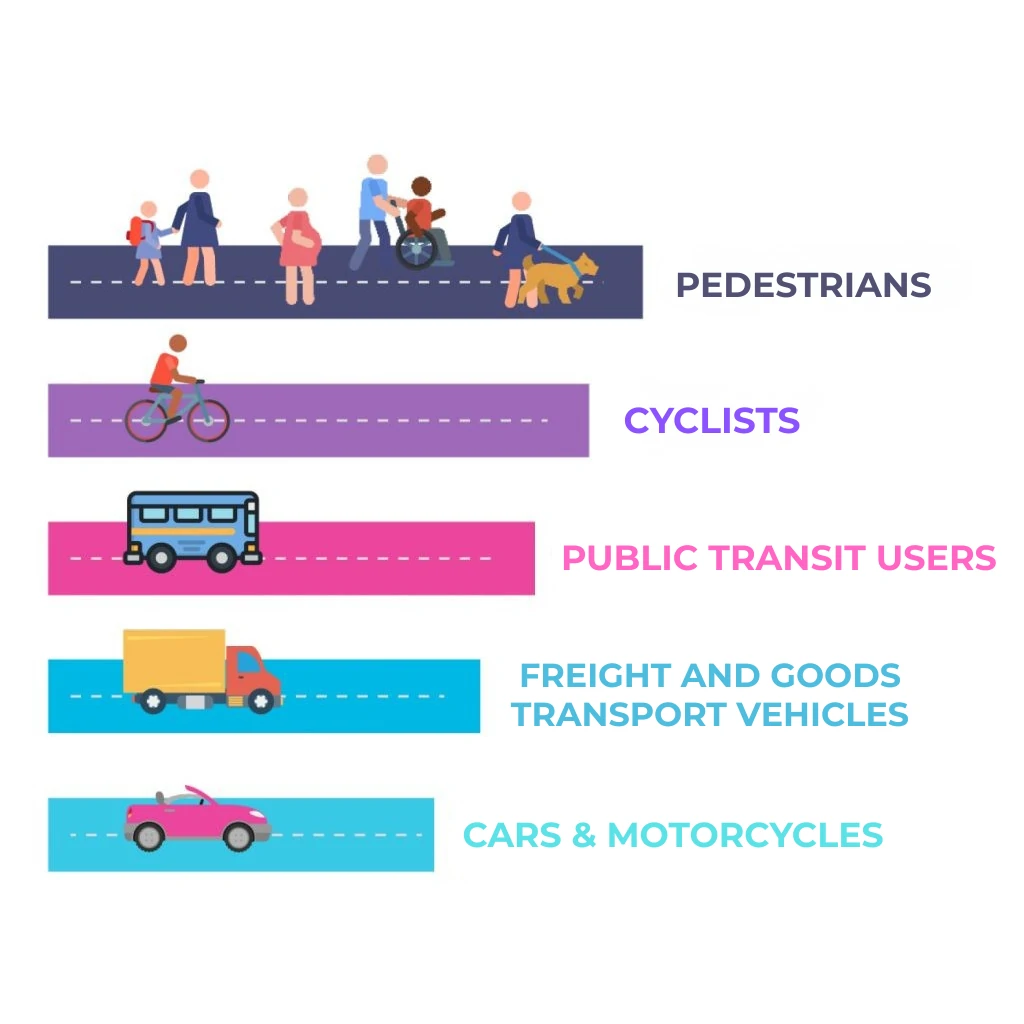
As mentioned earlier, transport modes are divided into several groups. Each occupies a distinct step in the pyramid: 1) pedestrians, 2) cyclists, 3) public transit users, 4) freight and goods transport, and 5) private car users.
The image below illustrates each level of the hierarchy:
The First Level: Pedestrians
People walking or using wheelchairs, including children, elderly, and people with disabilities. Walking is the most universal, low-impact, and health-promoting mode.
Walking also strengthens social interaction by making streets more vibrant and inclusive. When sidewalks are safe and accessible, communities thrive: people meet, shop locally, and feel more connected to their neighborhoods.
Moreover, prioritizing pedestrians and wheelchair users in urban planning reduces inequality. Accessible infrastructure ensures that mobility is not a privilege but a right, allowing everyone—regardless of age or ability—to move freely and safely through the city.
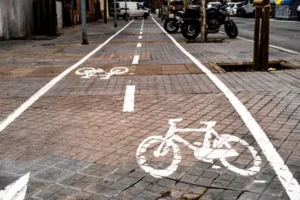
The Second Level: Bicycles
Bicycles are an efficient, low-emission, space-saving transport mode suitable for short- to medium-distance trips (up to 5-6 miles), offering health and environmental benefits.
Cycling helps ease traffic congestion by occupying much less space than private vehicles and reducing noise pollution in urban areas. Cities that prioritize cycling infrastructure often achieve more efficient mobility systems and a better quality of life for residents.
Beyond their environmental benefits, bicycles contribute to social inclusion by providing an affordable and accessible transportation option. They allow people from different income levels to move around more easily and strengthen community connections by improving access to local businesses, schools, and workplaces.
The Third Level: Public Transit
Buses, trains, trams, and subways are prioritized for their ability to move large numbers of people efficiently, reduce emissions, and save urban space.
These systems not only provide reliable daily mobility but also encourage equitable access to jobs, education, and healthcare. By reducing dependence on private cars, they help cities cut traffic congestion and reclaim public space for pedestrians and cyclists. Well‑planned transit networks also stimulate economic growth by connecting businesses and communities more efficiently. Ultimately, prioritizing collective transport strengthens urban resilience and supports a cleaner, healthier environment.
The Fourth Level: Freight And Goods Transport
Essential for economic activity but should be regulated to minimize congestion and environmental impact, often with restricted delivery times.
Freight and goods transport is indispensable for supplying cities with food, raw materials, and consumer products. However, unregulated circulation can overwhelm urban streets, increasing congestion and emissions. To balance efficiency with sustainability, many cities implement designated delivery zones and time windows.
These measures reduce conflicts with passenger traffic and improve safety for pedestrians and cyclists. Ultimately, smart regulation ensures that economic activity continues without compromising urban livability or environmental goals.
The Fifth Level: Private Vehicles
Placed at the bottom due to high emissions, congestion, and space consumption, making them the least sustainable option. Although private vehicles provide flexibility and convenience, they place a heavy burden on urban infrastructure.
Cities that prioritize automobiles risk undermining sustainable mobility goals and worsening air quality. For these reasons, private cars remain at the bottom of the Mobility Pyramid, highlighting the urgent need for alternatives.